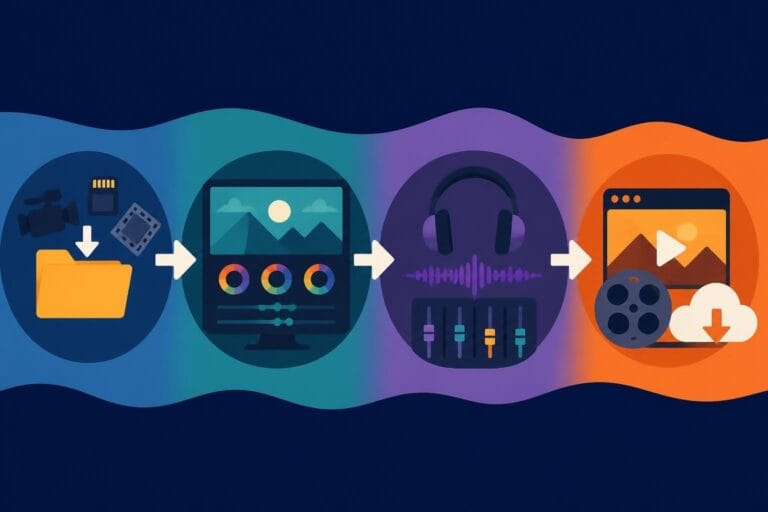
Post Production Video Editing: Complete Guide for 2026
Discover how post production video editing transforms raw footage into professional content. Learn workflows, tools, and outsourcing tips.
10 Min. ReadRead More
5 dedicated editor spots open this week. Book a call to reserve →
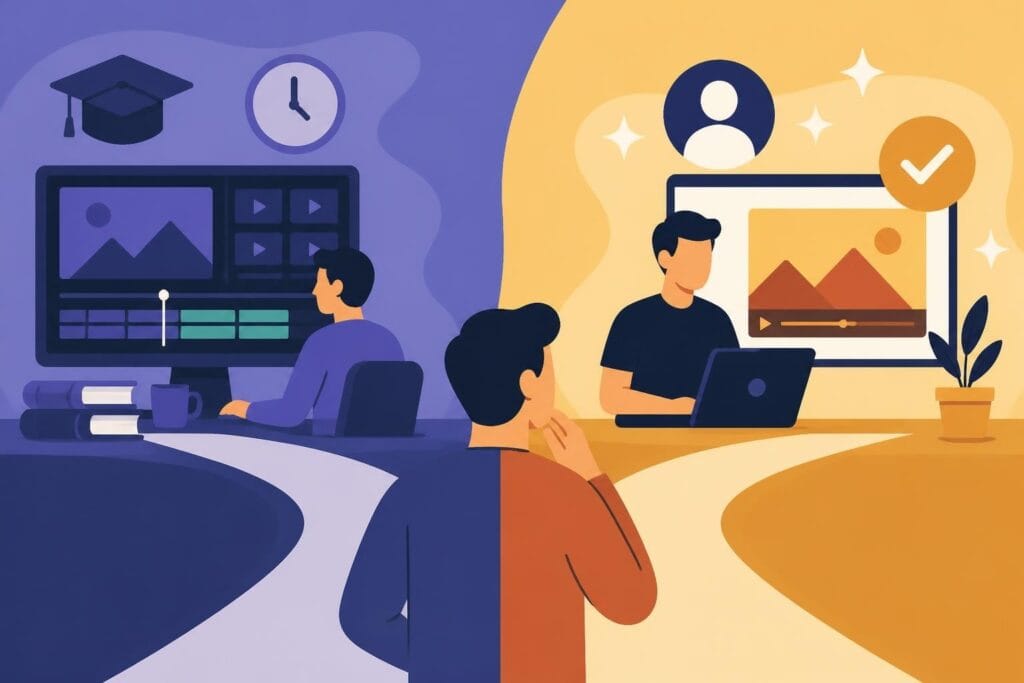
Video editing tutorials flood the internet, but should you learn them or outsource? Discover the smarter path for creators in 2026.
 Knowledge Base
July 20, 2026
The internet is bursting with video editing tutorials. A quick search reveals thousands of hours of instruction on every platform imaginable, from basic cuts to Hollywood-level color grading. But here's the question nobody's asking: should you actually be watching them? For content creators, business owners, and marketers juggling a million tasks, the real skill isn't mastering Adobe Premiere Pro. It's knowing when to learn and when to let someone else handle it. Let's dive into the world of video editing education and figure out what actually makes sense for your business in 2026.
Video editing tutorials have become a massive industry. Platforms like YouTube, Skillshare, and dedicated training sites pump out fresh content daily, promising to transform beginners into editing pros. The appeal is obvious: learn a valuable skill, save money on editors, and maintain complete creative control.
The most common types of tutorials include:
The quality ranges wildly. Some resources, like those from CyberLink’s Learning Center, offer structured pathways through their software. Others are scattered 10-minute clips that teach one trick without context.
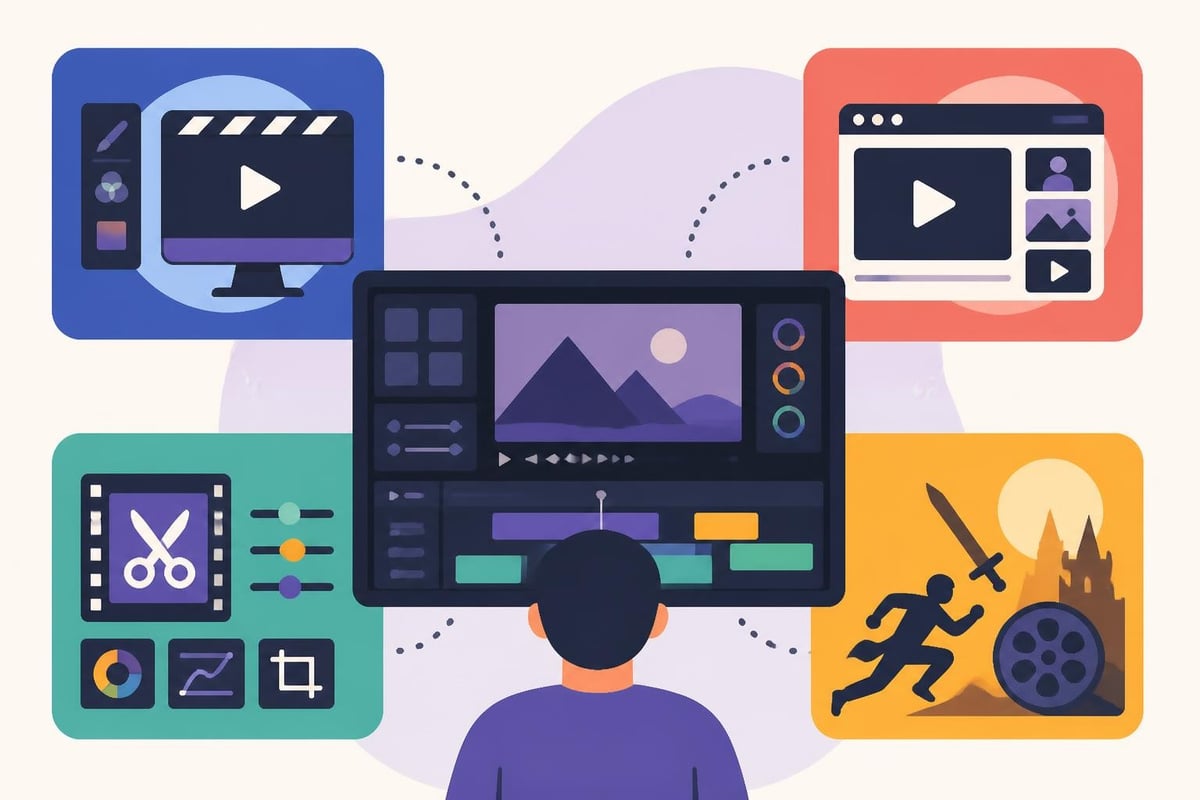
Here's what most video editing tutorials don't tell you upfront: the learning curve is steep and never-ending. Software updates constantly. Platform trends shift weekly. What works for YouTube long-form doesn't translate to TikTok editing strategies.
Let's break down the actual time commitment:
| Learning Stage | Time Investment | Skill Level Achieved |
|---|---|---|
| Basic cuts and transitions | 20-30 hours | Can create simple videos |
| Intermediate techniques | 100+ hours | Competent but slow |
| Advanced color and audio | 200+ hours | Professional quality possible |
| Platform-specific mastery | Ongoing | Trends change constantly |
That's just learning time. It doesn't include the hours spent actually editing your content each week.
Quality video editing tutorials focus on principles, not just button-pushing. Resources like Film Editing Pro teach storytelling fundamentals that Hollywood professionals use. Understanding pacing, rhythm, and emotional beats matters more than knowing every Premiere Pro shortcut.
Core concepts worth learning include:
Media College’s comprehensive tutorials cover these foundational elements well, giving context to the technical skills. But here's the catch: understanding these concepts doesn't mean you need to execute them yourself.
Different software requires different tutorial approaches. Free options like DaVinci Resolve have robust communities sharing knowledge. Professional tools like Premiere Pro and Final Cut Pro X have official training programs, including offerings from Adobe Video Training that take users from beginner to advanced levels.
The problem? Each platform has unique workflows, keyboard shortcuts, and best practices. Switch platforms, and you're starting over. Many creators waste months bouncing between software before settling on one, multiplying their learning time.
Video editing tutorials are often free or cheap. But the real cost isn't the tutorial price tag. It's everything else that comes with doing it yourself.
Time is your most expensive resource. If you're spending 10 hours weekly learning and editing when you could be creating content, meeting clients, or developing strategy, what's the actual cost? For most business owners and creators, it's astronomical.
Your opportunity cost breakdown:
A short-form video editor can knock out in two hours what takes a beginner eight hours. That six-hour difference compounds weekly, monthly, yearly.
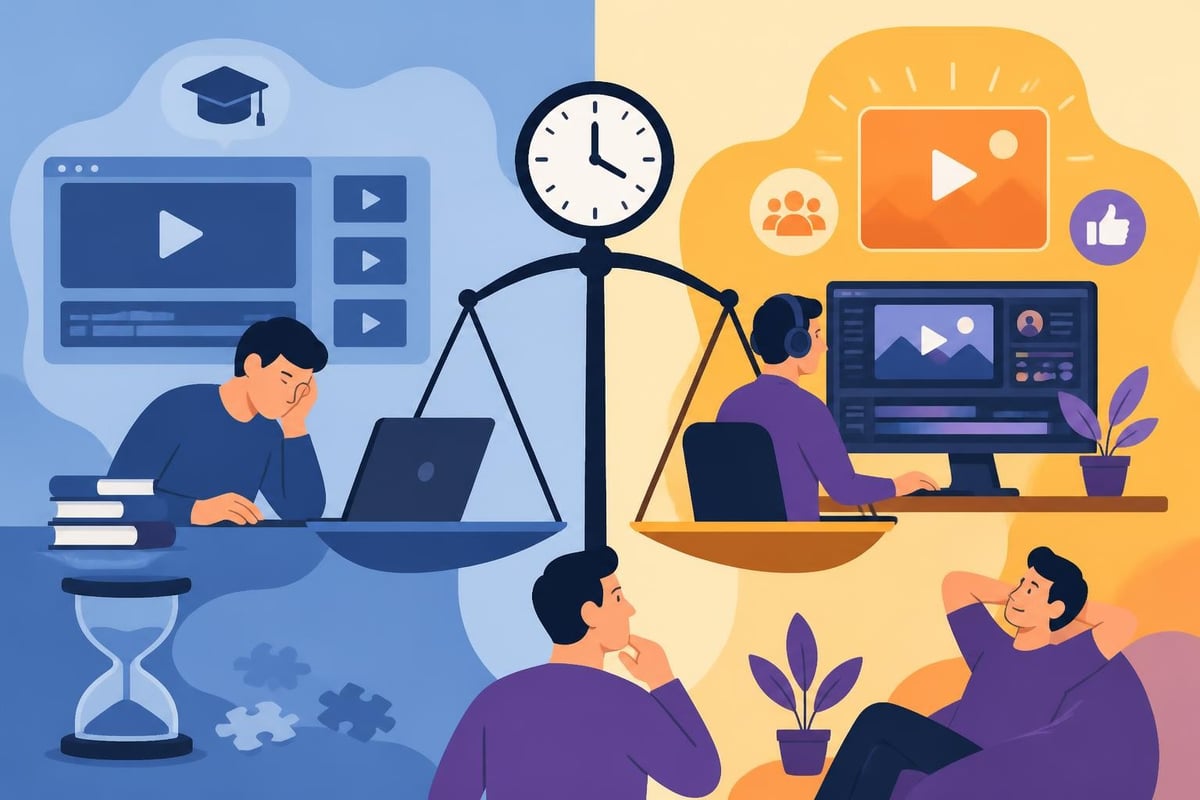
Even after hundreds of hours studying video editing tutorials, most people plateau at "pretty good." Professional editors spend years refining their craft, staying current with trends, and developing instincts that tutorials can't teach.
Your audience notices the difference. Choppy cuts, inconsistent pacing, poor audio mixing, and amateur transitions all scream "I did this myself." That's fine for personal vlogs, but for businesses and serious creators, it damages credibility.
Let's be fair: video editing tutorials serve a purpose. They're not universally bad, just often misapplied.
Tutorials work great when:
That last point matters. Understanding basic editing helps you brief editors better. Knowing the difference between a J-cut and an L-cut means you can request specific techniques. The University of Washington’s TRIO Quest tutorials cover production fundamentals that help creators become better collaborators with their editing teams.
Some creators use tutorials to handle super-simple tasks while outsourcing complex work. They might trim raw footage or add basic text overlays, then send the project to professionals for polishing. This reduces editor workload and costs while keeping the creator from drowning in technical details.
| Task Type | DIY with Tutorials | Outsource to Pros |
|---|---|---|
| Basic trimming | ✓ Reasonable | ○ Overkill |
| Color grading | ○ Time-intensive | ✓ Much faster |
| Audio mixing | ○ Requires expertise | ✓ Better results |
| Motion graphics | ○ Very difficult | ✓ Professional quality |
| Platform optimization | ○ Constantly changing | ✓ Stay current automatically |
This approach still requires learning fundamentals, but limits the scope significantly.
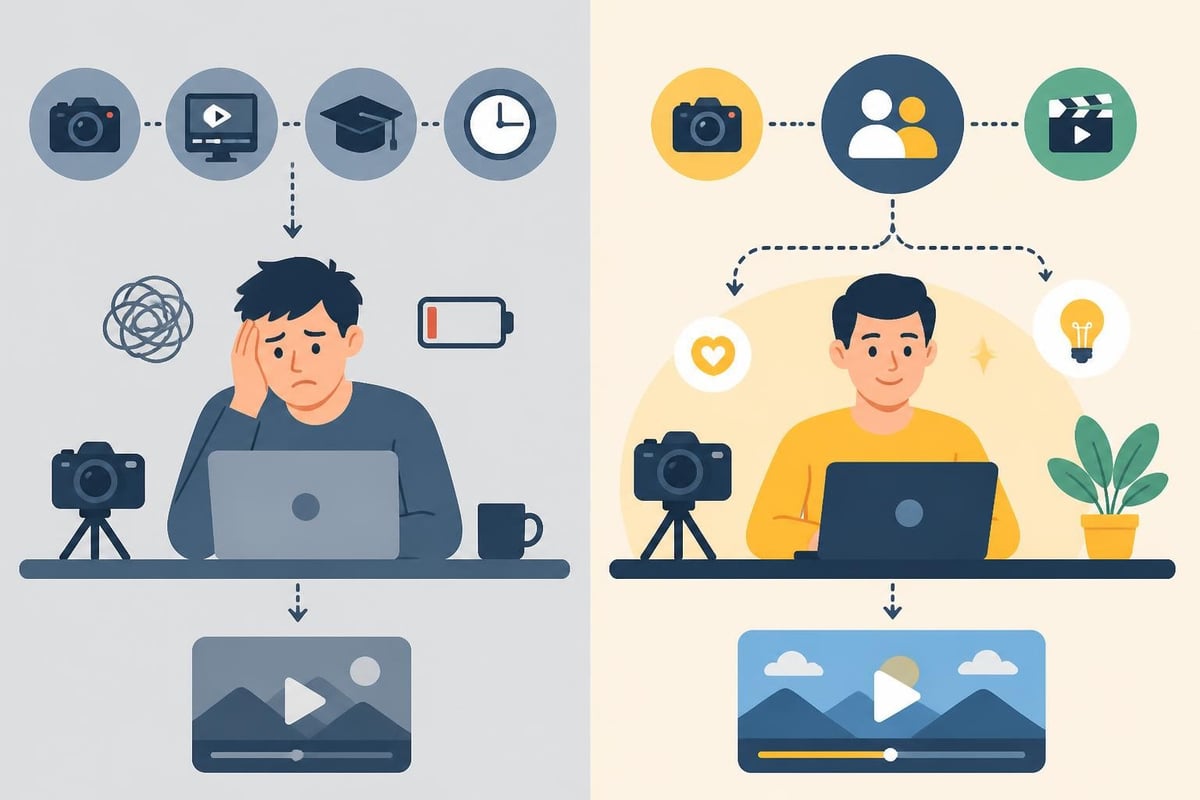
When you stop watching video editing tutorials and start delegating editing, everything shifts. Suddenly your role changes from technician to creative director. You focus on what you're actually good at: creating content, building relationships, developing strategy.
What professional editing unlocks:
Check out the case studies showing how creators transformed their output after ditching the tutorial treadmill and partnering with dedicated editors.
Before deciding whether to learn or outsource, audit your actual requirements. Different content types demand different editing complexity.
Platform-specific editing needs:
Noble Desktop’s video editing insights discuss different tutorial types available, but the real question is whether mastering any of them serves your actual business goals.
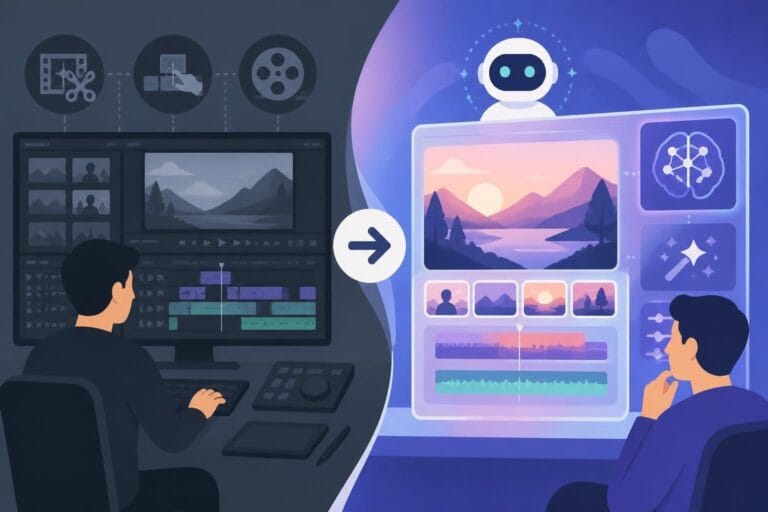
Video editing tutorials in 2026 increasingly focus on AI-assisted tools. Software now handles tasks that previously required advanced skills: auto-captioning, smart cropping for different aspect ratios, color matching, and even basic cuts based on audio analysis.
This changes the learning equation. Some tasks genuinely got easier. But it also means the bar for "professional-looking" content rose. Everyone has access to basic AI tools, so standing out requires expertise beyond what tutorials typically teach.
AI tools now handle:
But AI doesn't understand your brand voice, your audience's preferences, or the subtle storytelling choices that build connection. That still requires human expertise.
Here's the framework for deciding between tutorials and outsourcing: Calculate your hourly value, estimate realistic editing time, and compare against professional editing costs.
If your time is worth $50/hour and editing takes you eight hours weekly, that's $400 in opportunity cost. Plus the hours spent learning and the quality gap affecting viewer retention. Most professional editing services cost less than that opportunity cost, especially when you factor in the quality improvement and consistency benefits.
Questions to ask yourself:
For most creators and business owners, the math is clear. Professional video editing services make more financial sense than the tutorial pathway, even before considering the mental energy and stress reduction.
Even if you master current techniques through video editing tutorials, the learning never stops. Software updates quarterly. Platform algorithms shift. Viral trends emerge and fade. Audio standards evolve. Color grading preferences change.
Professional editors maintain these skills because it's their full-time focus. For creators, it's a never-ending distraction from core business activities. Video editing tips and techniques constantly evolve, requiring ongoing education just to maintain current skill levels.
The best content creators in 2026 treat video editing as one component in a larger system. They understand enough to direct effectively, but delegate execution to specialists. This mirrors how businesses operate in every other area, nobody expects the CEO to also be the accountant, web developer, and customer service rep.
A functional content system includes:
When editing is handled, you can focus on what actually grows your business: audience development, partnerships, product creation, and strategic planning.
Instead of diving deep into video editing tutorials, develop skills that actually move your business forward. Brief communication, creative direction, storytelling fundamentals, and performance analysis create more value than knowing the difference between ripple edit and roll edit.
Understanding editing enough to collaborate effectively matters. Becoming the editor yourself rarely does, unless that's genuinely your passion and intended career path.
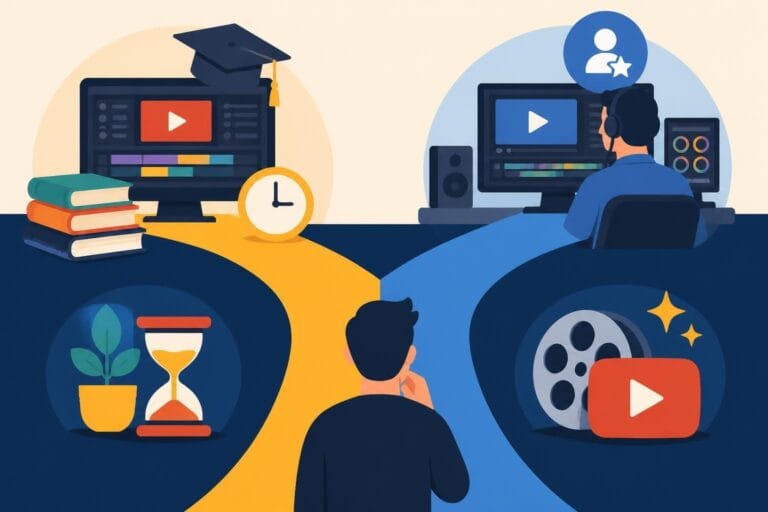
Video editing tutorials offer knowledge, but they can't give you back time or guarantee professional results. For busy creators and business owners in 2026, the smarter investment is often delegation rather than education. When you work with beCreatives, you get dedicated editors who live and breathe video production, unlimited revisions to nail your vision, and all your time back to focus on what you do best: creating content that connects with your audience.
Discover how post production video editing transforms raw footage into professional content. Learn workflows, tools, and outsourcing tips.
Master video editing HD quality standards, encoding settings, and workflow best practices to deliver professional content in 2026.
Discover what makes a YouTube video editing course worth your time in 2026, plus smarter alternatives for busy creators and agencies.
Looking to hire video editor for YouTube? Discover the best hiring strategies, what to look for, and how to build a winning content team in 2026.
Discover the best music video editing software for 2026. Compare features, pricing, and workflow tools to create stunning music videos faster.
Looking for a video editing company near me? Learn how to choose the right partner, what to expect, and whether local is best in 2026.
Discover how video editing AI online is changing content creation in 2026. Explore smart tools, workflows, and what creators really need to know.
Master wedding videography editing with expert tips on storytelling, pacing, and delivery. Learn how to transform raw footage into cinematic films.
Choosing an HD video editing app in 2026? Discover features, performance tips, and how professionals handle high-definition content.
Discover the best free simple editing software for videos and photos in 2026. Compare features, learn what works, and decide when to DIY or outsource.

Editing videos yourself can take a lot of your precious time, but do not worry – we‘ve got you covered! Our highly skilled Video Editors are here to speed up the process and give you time to create more content.
What do you need edits for?


Scratch to see who you got
This is your match, not your assignment.
We confirm your editor once you subscribe.
Pick a time that works and we’ll take it from there.
Open the booking page15 minutes, free