Post Production Video Editing: Complete Guide for 2026
Discover how post production video editing transforms raw footage into professional content. Learn workflows, tools, and outsourcing tips.
10 Min. ReadRead More
5 dedicated editor spots open this week. Book a call to reserve →
Master postproduction video in 2026. Learn workflows, trends, and how professional editing transforms raw footage into content that converts.
September 17, 2026
Postproduction video is where raw footage transforms into polished content that actually converts. It's the difference between scattered clips gathering digital dust and engaging videos that build your brand, drive sales, and keep your audience coming back. Whether you're a YouTuber, agency creative, or business owner, understanding postproduction workflows helps you make smarter decisions about your content strategy – and more importantly, figure out what to keep in-house and what to hand off to pros.
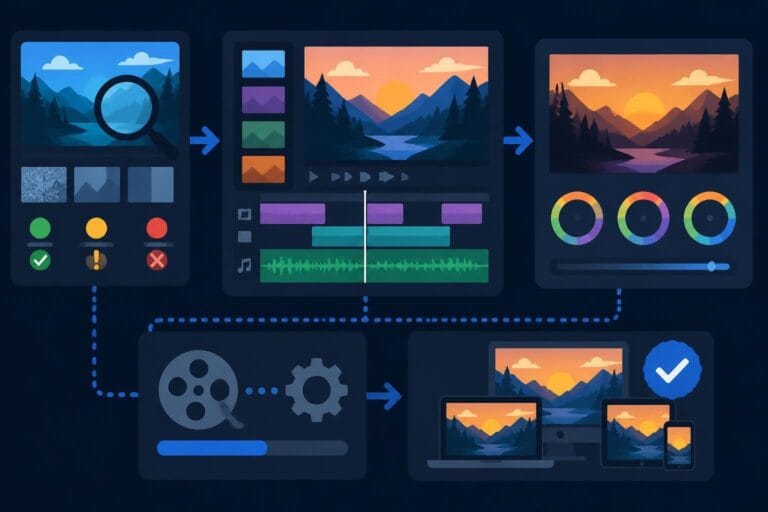
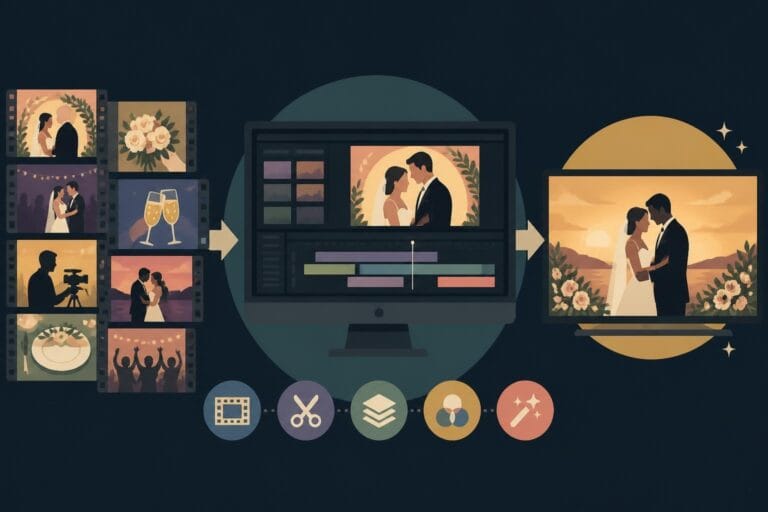
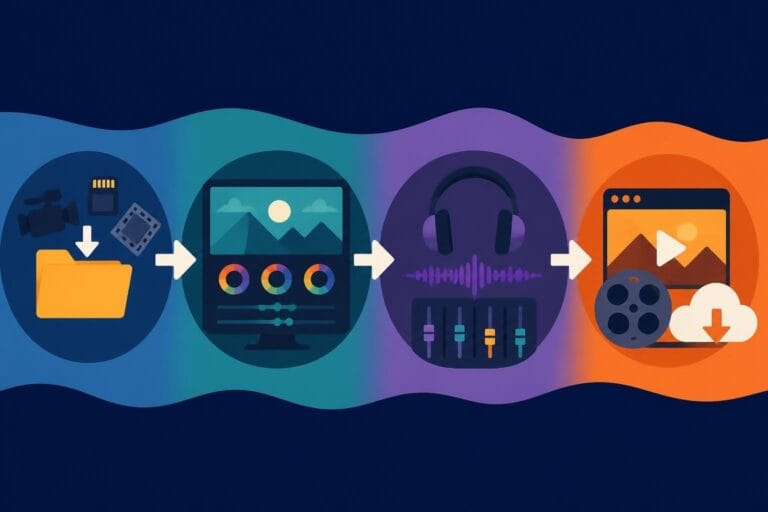
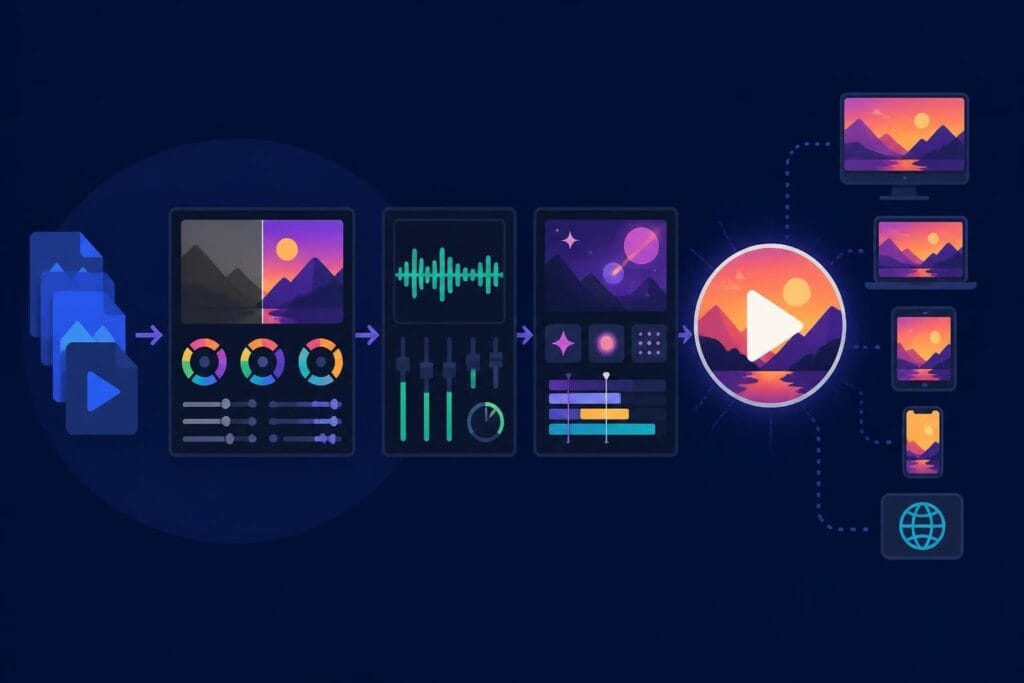
Postproduction video encompasses everything that happens after you stop recording. It's the editing, color correction, sound design, motion graphics, visual effects, and final delivery that turns your footage into finished content.
Think of it as the construction phase. You've got your raw materials (footage), now you need skilled craftspeople to build something people want to watch.
The core stages include:
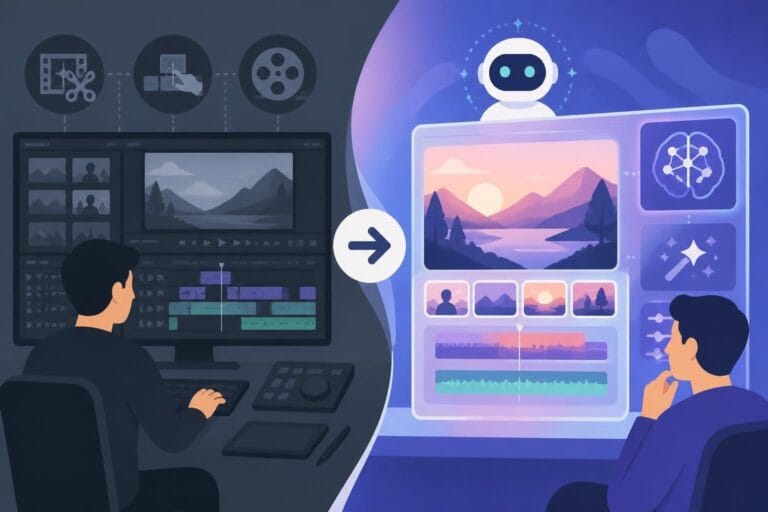
Modern postproduction video workflows now integrate AI-assisted tools for transcription, rough cuts, and even preliminary color matching. But here's the thing: the technology only speeds up the technical stuff. The creative decisions – pacing, emotional beats, storytelling choices – still need a human brain.
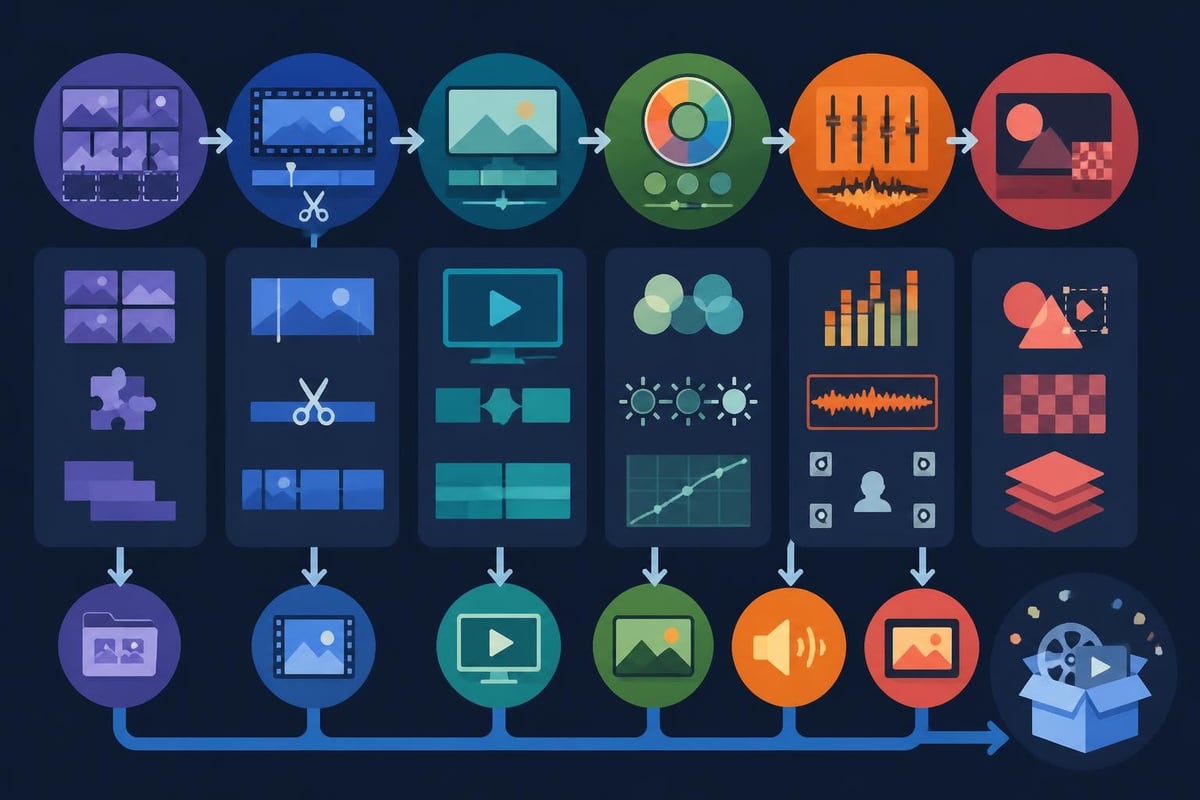
Your two-hour shoot might produce 90 minutes of footage. Turning that into a tight three-minute video? That's easily 4-6 hours of editing work, sometimes more.
Here's why postproduction video work is time-intensive:
Many creators underestimate postproduction video time and end up drowning in their editing queue. That's exactly why unlimited video editing services have become game-changers for busy content creators who need consistent output without the editing bottleneck.
Modern postproduction video relies on sophisticated technical infrastructure, especially for agencies and production companies handling multiple projects simultaneously.
Your footage arrives in various formats – probably H.264 or H.265 from your camera. But professional postproduction video workflows typically transcode to intermediate codecs like ProRes or DNxHR for editing. Why? These formats maintain quality through multiple renders and make timeline playback smoother.
For final delivery, you're usually exporting back to H.264/H.265 (MP4), but increasingly also preparing streaming-optimized formats like CMAF for multi-platform distribution.
The FFmpeg documentation provides comprehensive guidance on transcoding between formats – essential knowledge for any serious postproduction workflow, though honestly, most editors just want their software to handle this automatically.
| Codec Type | Best Use | Pros | Cons |
|---|---|---|---|
| H.264/H.265 | Camera recording, final delivery | Small file sizes, universal playback | Heavy processing during editing |
| ProRes/DNxHR | Editing workflow | Smooth playback, maintains quality | Large file sizes |
| RAW formats | High-end production | Maximum flexibility, no compression | Massive storage needs |
Postproduction video gobbles up storage. A single 4K project can easily hit 50-100GB. Multiply that across dozens of active projects and you're looking at serious infrastructure.
Smart storage strategies:
Professional platforms offer unlimited storage as part of their service. It's one less headache when you're transforming raw footage into content at scale.
Broadcast and streaming platforms have strict technical requirements. Postproduction video workflows need QC (quality control) checks before delivery to catch issues like:
The EBU QC documentation outlines automated quality checks used by broadcasters worldwide. Even if you're not delivering to TV networks, these standards represent best practices worth following.
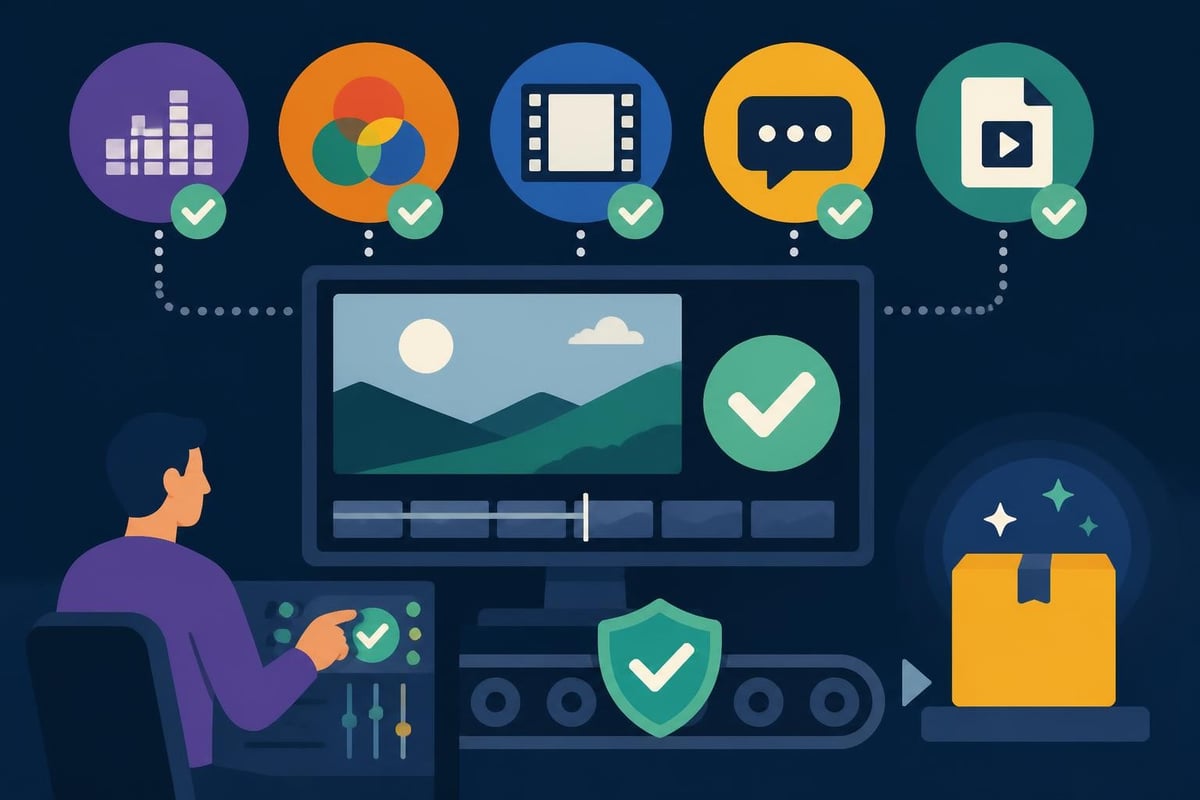
Technical proficiency keeps your videos functional. Creative choices make them compelling.
The single biggest difference between amateur and professional postproduction video? Pacing. Pros know when to linger and when to cut tight.
Pacing considerations:
Good editors develop an intuitive sense for rhythm. They feel when a shot has overstayed its welcome or when a transition is jarring. It's like music – technically correct notes don't guarantee a song anyone wants to hear.
Color grading in postproduction video does more than make footage look pretty. It establishes mood, directs attention, and reinforces brand identity.
Think about it: warm, saturated colors feel energetic and optimistic. Cool, desaturated tones feel serious or melancholic. Consistent color treatment across your content builds visual brand recognition faster than you'd think.
Professional colorists can spend hours on a single grade, but for most content creators, what matters is:
Viewers forgive mediocre visuals faster than bad audio. Seriously. Postproduction video audio work includes dialogue cleanup, music mixing, sound effects, and ensuring consistent levels throughout.
Common audio fixes:
Many creators overlook audio until they notice viewers bouncing. Don't be that person. Invest in audio quality from the start, or ensure your editing team prioritizes it.
Each platform has its own personality, technical specs, and audience expectations. Smart postproduction video adapts content for each destination rather than uploading identical files everywhere.
Social platforms favor:
Marketers and agencies particularly need efficient postproduction video workflows for social, where volume matters. Posting consistently beats posting perfectly.
YouTube postproduction video focuses on:
The editing style can be more relaxed than social, but retention analytics should directly inform your editing decisions. Watch your audience retention graph and ask yourself why viewers left at specific points.
Professional broadcast postproduction video requires adherence to technical standards like SMPTE ST 2110 for IP-based workflows and delivery in formats like IMF (Interoperable Master Format) for versioning and long-term archival.
Unless you're working with broadcast clients regularly, this level of complexity probably isn't your concern. But it illustrates how deep postproduction video can go when stakes and budgets are high.
| Platform | Aspect Ratio | Max Length | Key Priority |
|---|---|---|---|
| TikTok | 9:16 | 10 min | Hook + retention |
| Instagram Reels | 9:16 | 90 sec | Visual impact |
| YouTube | 16:9 | Unlimited | Watch time |
| 1:1 or 16:9 | 10 min | Professional value |
Here's the uncomfortable truth: most entrepreneurs and content creators spend way too much time editing their own videos.
You should handle your own postproduction video if:
Even then, consider whether those editing hours could generate more revenue doing literally anything else in your business.
Professional postproduction video services make sense when:
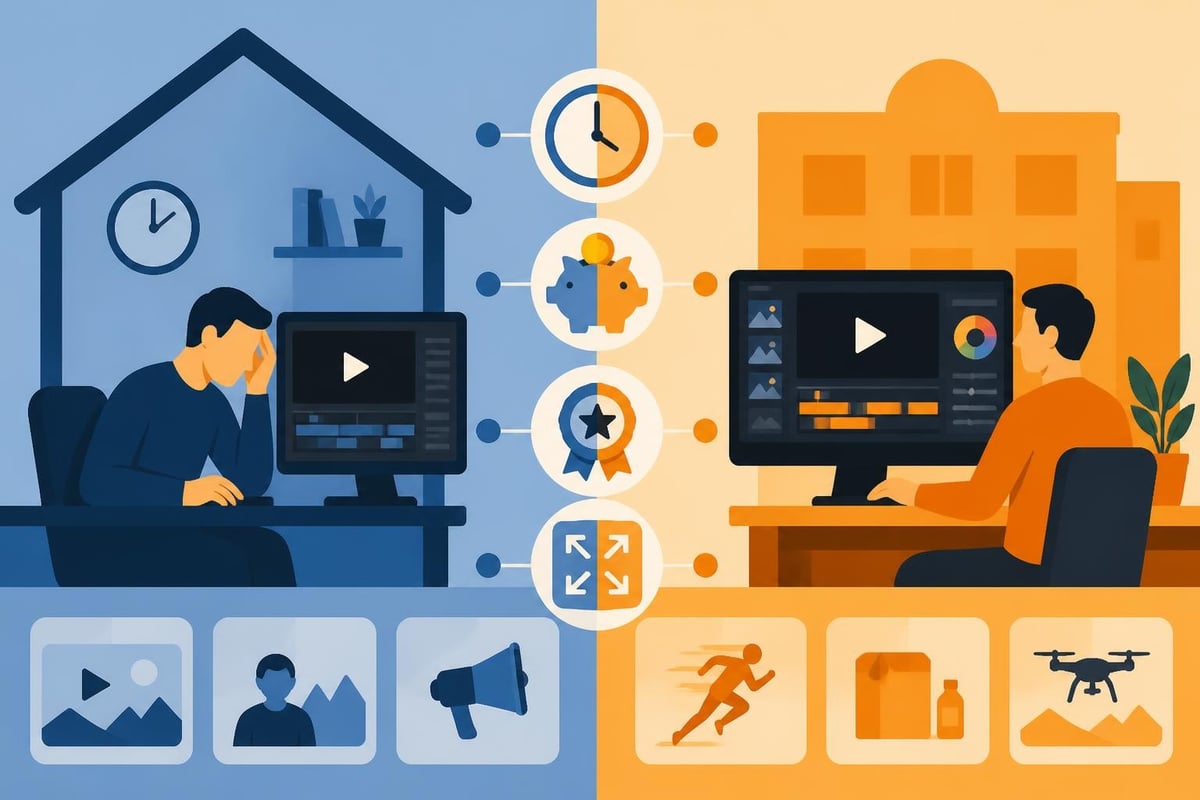
The math is simple. If you charge $200/hour for your actual expertise but spend 5 hours editing a video, that's $1,000 in opportunity cost. Quality editing services cost far less than your billable time.
Traditional editing services charge per project or per hour, which creates budget unpredictability. The unlimited model flips this: pay a flat monthly rate, submit unlimited projects, get unlimited revisions.
This works brilliantly for content creators and businesses with consistent video needs. No more rationing edits or skipping videos because the editing budget ran out.
The postproduction video landscape evolves fast. Here's what's shaping workflows this year.
AI now handles rough cuts, transcription, and preliminary color matching surprisingly well. But – and this is important – AI can't yet understand story, emotion, or brand nuance. It's a powerful assistant, not a replacement for human judgment.
Smart postproduction video workflows use AI for:
Then humans refine, add creative choices, and ensure the final video actually connects with real people.
Postproduction video is increasingly cloud-based. Editors, clients, and collaborators review, comment, and approve work without sending massive files back and forth.
Modern platforms enable:
The NMOS specifications define standards for networked media systems, enabling interoperability across different tools and facilities – crucial for complex multi-vendor postproduction environments.
Vertical video isn't a compromise anymore; it's the primary format for a huge chunk of online content. Postproduction video workflows now start vertical-first rather than cropping from horizontal.
This means:
If you're still treating vertical as an afterthought, you're behind.
Once you've invested time and budget into postproduction video, protect that investment through proper archival and preservation.
Always keep the highest-quality master files. These should be:
The Library of Congress preservation guidelines offer detailed recommendations for long-term video archival – probably more depth than most creators need, but valuable if you're building a significant content library.
Save your actual editing project files (Premiere projects, Final Cut libraries, DaVinci Resolve databases) alongside your media. Future you will thank past you when you need to revisit or repurpose old content.
Organized archive structure:
Project Name/
  ├── Media/
  │   ├── Original footage/
  │   ├── Graphics/
  │   └── Audio/
  ├── Project files/
  ├── Exports/
  └── Documentation/
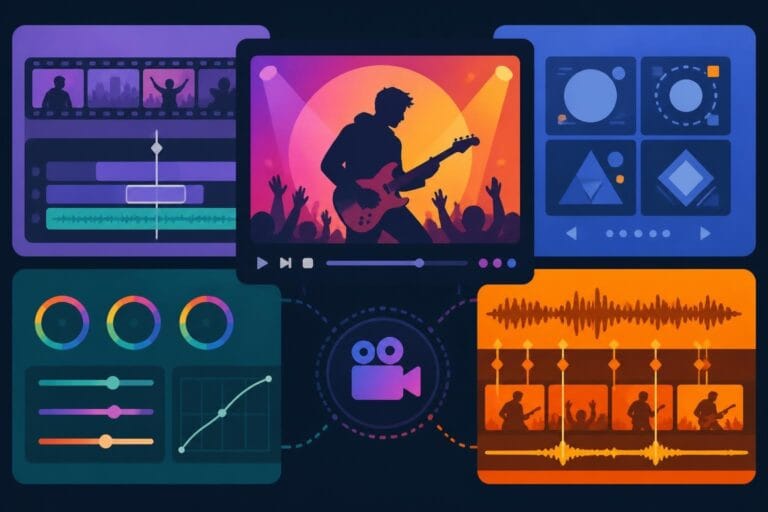
Postproduction video for events, interviews, or performances often involves syncing and switching between multiple camera angles. Modern editing software makes this easier with automatic audio-based sync.
Multi-cam workflow:
This technique dramatically speeds up coverage-heavy projects while maintaining visual variety.
Some postproduction video projects require visual effects or complex motion graphics. This might mean:
These specialized skills often justify bringing in dedicated motion designers rather than expecting your editor to do everything. Knowing your team's strengths and limitations prevents bottlenecks.
360 video editing and immersive formats require unique postproduction video approaches. The spatial nature means traditional editing rules don't always apply – cuts feel more jarring, viewers control perspective, and stitching errors can break immersion.
Similarly, fitness training videos need specific postproduction choices like rep counters, form cues, and timing overlays that generic editing doesn't address.
Whether handling postproduction video in-house or outsourcing, systems and processes determine success more than individual talent.
Document your preferences:
Benefits of documented SOPs:
Clear feedback prevents endless revision cycles. Instead of "make it poppier," try:
Professional video editing platforms include built-in feedback tools that keep everything organized and prevent the dreaded "feedback scattered across email, Slack, and text messages" nightmare.
How do you know if your postproduction video investment is paying off?
Track:
If professional postproduction video enables you to publish 3x more content with better quality, the ROI calculation becomes pretty straightforward.
Even experienced creators make these errors:
More transitions, more effects, more everything doesn't equal better. Sometimes the cleanest cut is barely noticeable. Trust simplicity.
Uploading 4K to platforms that compress to 1080p wastes bandwidth and upload time. Know each platform's optimal specs and export accordingly.
Background noise, inconsistent levels, and harsh sibilance scream amateur. Spend time on audio or ensure your editing team prioritizes it.
Losing project files or working media because of disorganized storage is tragically common. Build systems before you need them.
At some point, you're not making the video better – just different. Set revision limits and trust the creative process.
Want to dive deeper? These resources help:
For businesses and agencies, scheduling strategy calls with experienced teams provides customized insights faster than generic online learning.
Polished postproduction video affects your business in measurable ways:
Brand perception improves. Professional editing signals competence and credibility. Viewers subconsciously judge your business capability by your content quality.
Conversion rates increase. Well-edited explainer videos hold attention better, communicate value clearer, and drive more action than rough cuts.
Content efficiency multiplies. Skilled editors can repurpose content into multiple formats, extracting maximum value from every shoot.
Marketing performance compounds. Better videos get more engagement, which boosts algorithmic distribution, which brings more viewers, creating a virtuous cycle.
If your video content represents your business to the world, postproduction video quality directly impacts revenue. It's not a luxury; it's infrastructure.
For those looking to outfit their viewing spaces with the same professionalism as their content production, specialists like ANR media create custom home cinema experiences that do justice to high-quality video content.
Postproduction video separates content that gets scrolled past from content that drives real business results. Whether you're optimizing workflows in-house or finally admitting that editing isn't your zone of genius, understanding these principles helps you make smarter content decisions. If you're ready to scale your video output without drowning in editing queues, beCreatives offers unlimited video editing with dedicated editors who handle the postproduction heavy lifting while you focus on what actually grows your business.
Discover how post production video editing transforms raw footage into professional content. Learn workflows, tools, and outsourcing tips.
Master video editing HD quality standards, encoding settings, and workflow best practices to deliver professional content in 2026.
Discover what makes a YouTube video editing course worth your time in 2026, plus smarter alternatives for busy creators and agencies.
Looking to hire video editor for YouTube? Discover the best hiring strategies, what to look for, and how to build a winning content team in 2026.
Discover the best music video editing software for 2026. Compare features, pricing, and workflow tools to create stunning music videos faster.
Looking for a video editing company near me? Learn how to choose the right partner, what to expect, and whether local is best in 2026.
Discover how video editing AI online is changing content creation in 2026. Explore smart tools, workflows, and what creators really need to know.
Master wedding videography editing with expert tips on storytelling, pacing, and delivery. Learn how to transform raw footage into cinematic films.
Choosing an HD video editing app in 2026? Discover features, performance tips, and how professionals handle high-definition content.
Discover the best free simple editing software for videos and photos in 2026. Compare features, learn what works, and decide when to DIY or outsource.

Editing videos yourself can take a lot of your precious time, but do not worry – we‘ve got you covered! Our highly skilled Video Editors are here to speed up the process and give you time to create more content.
What do you need edits for?




Scratch to see who you got
This is your match, not your assignment.
We confirm your editor once you subscribe.
Pick a time that works and we’ll take it from there.
Open the booking page15 minutes, free