Post Production Video Editing: Complete Guide for 2026
Discover how post production video editing transforms raw footage into professional content. Learn workflows, tools, and outsourcing tips.
10 Min. ReadRead More
5 dedicated editor spots open this week. Book a call to reserve →
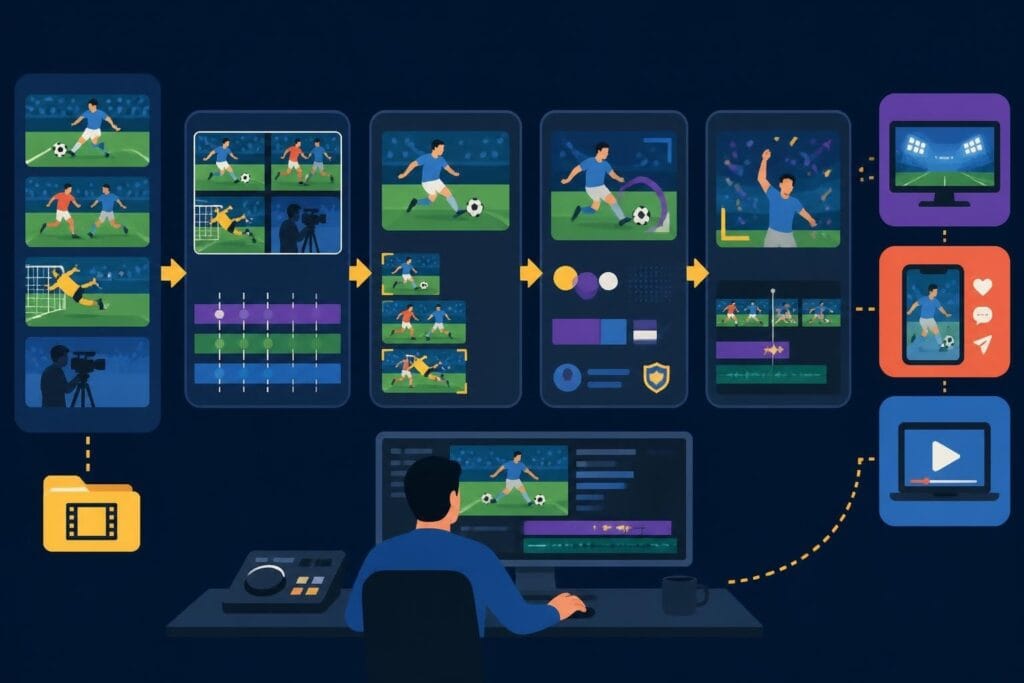
Discover how sports video editing has evolved with AI, cloud workflows, and real-time collaboration. Learn what’s driving the industry in 2026.
September 22, 2026
Sports content is everywhere in 2026. From highlight reels that rack up millions of views on TikTok to broadcast-quality game coverage streamed live across platforms, the demand for compelling sports video has never been higher. Behind every jaw-dropping dunk compilation, every slow-motion replay, and every game recap lies a craft that's evolved dramatically: sports video editing. Whether you're cutting highlights for a college athletics department, producing recap content for a sports marketing agency, or managing video for a professional team, understanding the workflows, technology, and creative strategies behind sports video editing is essential for staying competitive and visible.
Sports video editing used to mean waiting hours for footage transfers, manually syncing multiple camera angles, and working solo in a dark edit bay. Not anymore.
Modern sports video editing has become a collaborative, cloud-connected discipline where editors work in real-time with producers, graphics teams, and even remote broadcast crews. The shift accelerated during the pandemic and hasn't slowed down. Today's workflows prioritize speed, flexibility, and the ability to deliver content across multiple platforms simultaneously.
Key elements of contemporary sports video editing workflows include:
The pressure to deliver highlights within minutes of a game-ending play has pushed the industry toward solutions that eliminate bottlenecks. Adobe’s deep-dive on live sports editing workflows showcases how professional editors manage high-pressure, multicam environments where every second counts.
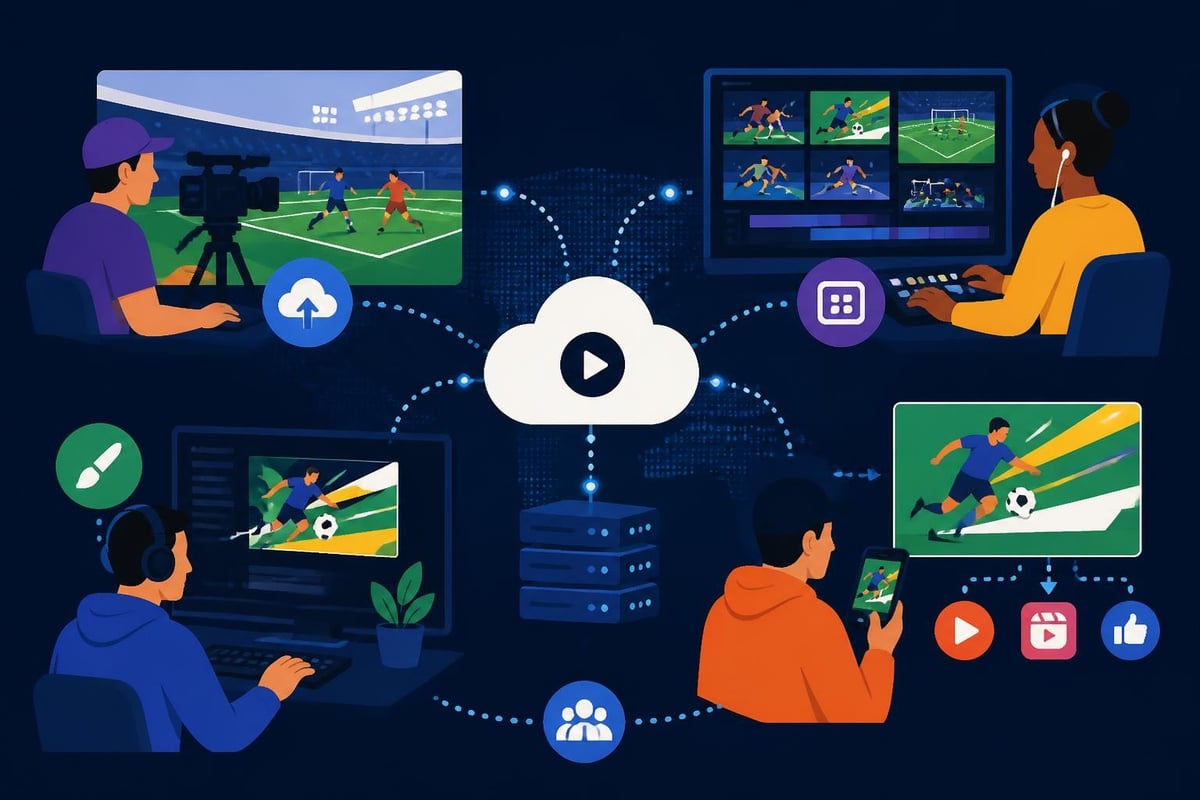
Here's the reality: sports video editing in 2026 isn't just about creating one polished piece. It's about creating twenty.
A single game generates content for broadcast, YouTube recaps, Instagram Stories, TikTok highlights, Twitter clips, and sponsored partner content. Each platform demands different aspect ratios, pacing, graphic treatments, and even music choices. What works as a two-minute YouTube recap completely bombs as a 15-second TikTok.
| Platform | Ideal Length | Aspect Ratio | Editing Style |
|---|---|---|---|
| TikTok | 15-30 seconds | 9:16 vertical | Fast cuts, trending audio, text overlays |
| Instagram Reels | 30-60 seconds | 9:16 vertical | Dynamic pacing, vibrant graphics |
| YouTube | 2-10 minutes | 16:9 horizontal | Longer storytelling, commentary integration |
| Twitter/X | 30-45 seconds | 16:9 or 1:1 | Quick highlights, captions essential |
| Broadcast | Variable | 16:9 horizontal | Professional graphics, slower pacing |
Smart sports organizations recognize they need dedicated teams focused on different content streams. That's where services like beCreatives for marketers and agencies come in, providing dedicated editors who understand platform-specific requirements without the overhead of hiring full-time staff for every format.
The tech stack behind sports video editing has exploded with innovation. Cloud platforms, AI-powered tools, and remote production architectures have fundamentally changed what's possible.
Traditional sports production meant hauling massive trucks full of equipment to every game. In 2026, many productions happen partially or entirely in the cloud. Remote production setups send camera feeds to centralized facilities where editors, directors, and graphics operators work from anywhere.
Verizon’s demonstrations using 5G and edge computing for remote live sports cutting show how low-latency networks enable real-time editing without geographic constraints. This matters for smaller organizations that can't afford traditional production infrastructure.
Benefits of cloud-based sports video editing include:
The NAB Show 2024 coverage highlighted how vendors are racing to perfect cloud workflows, with companies showcasing replay servers, graphics systems, and editing platforms optimized for remote production.
Artificial intelligence has moved from buzzword to practical tool. Modern sports video editing leverages AI for tasks that used to consume hours of manual work.
AI-powered features transforming sports video editing:
However, it's important to understand AI's limitations. Research validating computer-vision AI player-tracking tools shows these systems still require human oversight for accuracy, especially in crowded game situations or challenging lighting conditions.
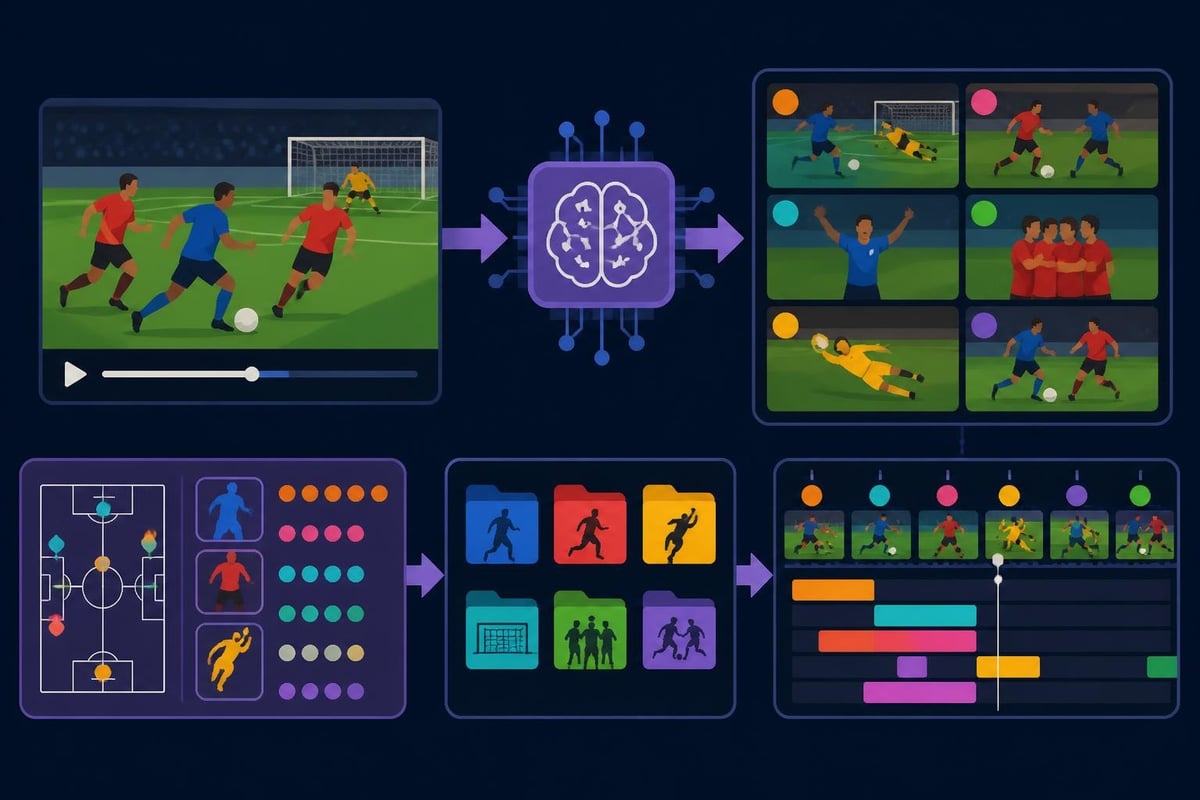
The most effective approach combines AI efficiency with human creativity. Let algorithms handle the grunt work of organizing and tagging footage while editors focus on storytelling, pacing, and emotional impact.
Not all sports video editing is created equal. The difference between amateur highlight reels and professional-grade content comes down to technical standards, attention to detail, and understanding what makes sports content compelling.
Professional sports video editing demands adherence to broadcast standards even when content is destined for social media. Why? Because quality signals professionalism, and professional content builds audience trust and engagement.
| Quality Factor | Minimum Standard | Professional Standard |
|---|---|---|
| Resolution | 1080p | 4K (especially for broadcast) |
| Frame Rate | 30fps | 60fps for smooth slow-motion |
| Color Grading | Basic correction | Full color grade matching brand guidelines |
| Audio Mix | Clean dialogue, balanced levels | Surround sound, dynamic range optimization |
| Graphics | Template-based | Custom-designed, on-brand elements |
When analyzing sports injury footage or technique breakdowns, methodological rigor becomes even more critical. The QA-SIVAS quality appraisal scale for sports injury video analysis provides frameworks that apply beyond research contexts, offering best practices for accurate, reliable sports video analysis that editors can apply to coaching content and performance review videos.
Here's what separates forgettable sports content from viral moments: storytelling.
Great sports video editing captures emotion, builds narrative tension, and gives viewers a reason to care beyond the final score. It's the difference between showing a three-pointer and showing the context of why that shot mattered, who made it, and what it meant for the team's season.
Narrative techniques that elevate sports video editing:
This is why many sports organizations and content creators choose to outsource their video editing rather than DIY. Professional editors bring not just technical skills but storytelling instincts honed across hundreds of projects.
Sports video editing isn't monolithic. Different applications demand different skills, tools, and approaches.
The bread and butter of sports video editing, highlight packages need to deliver maximum impact in minimum time. Editors must make split-second decisions about which angles to use, when to employ slow-motion, and how to pace cuts for maximum engagement.
For social platforms, these highlight reels need to grab attention in the first second or lose viewers forever. That's led to editing styles that prioritize immediate action over establishing shots.
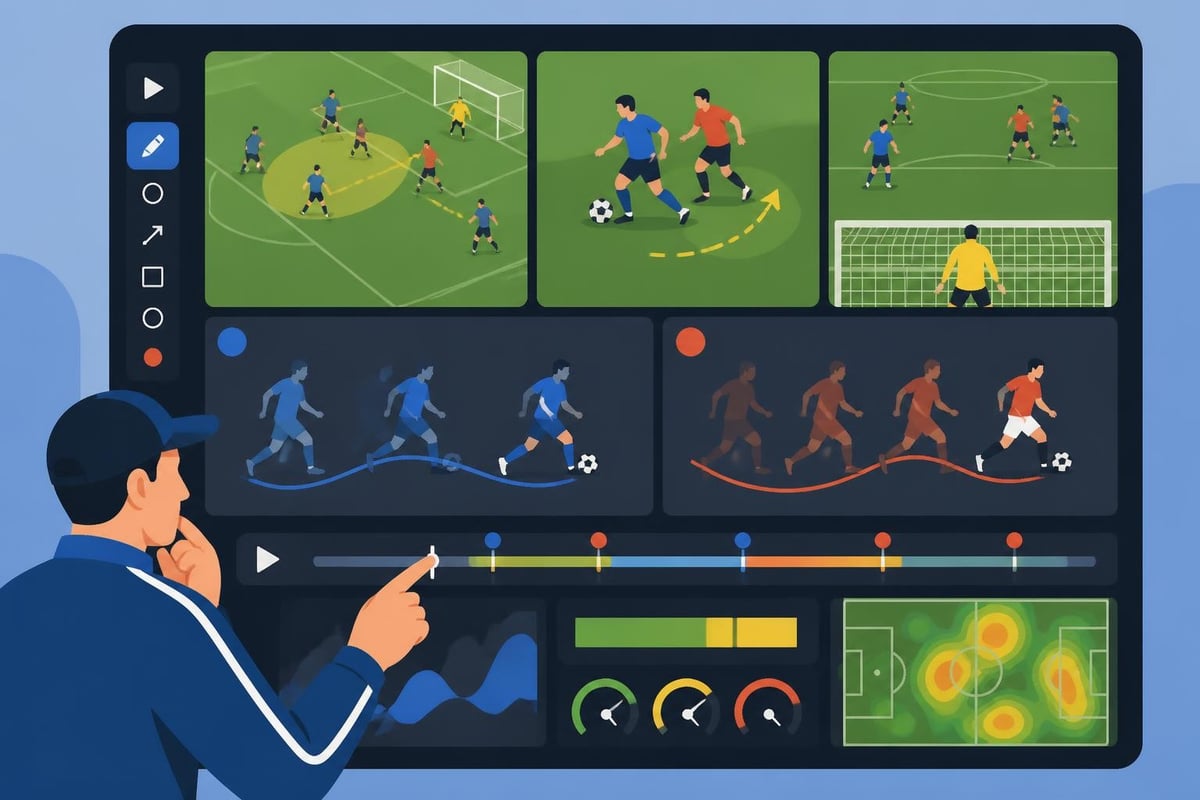
Coaches and analysts need different kinds of sports video editing. Here, clarity trumps excitement. Multi-angle breakdowns, frame-by-frame analysis, telestration graphics, and comparison editing allow teams to study performance and develop strategy.
This type of editing demands precision and the ability to present complex information clearly. Turning raw footage into content that serves coaching objectives requires understanding both the sport and instructional design principles.
Live sports video editing presents unique challenges. Editors work with live feeds, make real-time decisions about which camera angles to show, and integrate graphics and replays on the fly. There's no "undo" button during a live broadcast.
Modern home cinema and audio-video specialists often work with sports venues to create integrated viewing experiences where multiple camera angles and stats feeds are available simultaneously, requiring sophisticated switching and editing even for private venues and watching parties.
The explosive growth of sports betting has created demand for specialized content. Platforms and bookmakers need highlight packages focused on betting-relevant moments, statistical analysis videos, and prediction content that helps users make informed wagers.
Sports betting software providers integrate video content into their platforms, creating opportunities for editors who understand both sports and the specific information bettors need to see highlighted in footage.
Whether you're a one-person operation or a professional sports organization, efficiency in sports video editing comes down to systems, not just talent.
Sports generate massive amounts of footage. A single game might involve 8-12 camera angles running continuously for 2-3 hours. That's hundreds of gigabytes of content that needs to be ingested, organized, tagged, and made searchable.
Essential organizational practices:
Many organizations find that unlimited storage solutions solve major headaches. When you're not constantly juggling hard drives or deleting old footage to make room, workflows become dramatically simpler.
Sports brands need consistent visual identity across all content. Template-based editing systems ensure every piece of content matches brand guidelines while dramatically reducing production time.
Pre-built graphics packages, lower thirds, transitions, and effects libraries mean editors spend time on creative decisions rather than rebuilding basic elements for every video. Content creators who work with dedicated editing teams often see 40-50% time savings from well-designed template systems.
| Template Element | Purpose | Time Savings |
|---|---|---|
| Intro/Outro Graphics | Consistent branding on every video | 15-20 minutes per video |
| Lower Thirds | Player names, stats, captions | 10-15 minutes per video |
| Transition Packages | Smooth scene changes matching brand style | 5-10 minutes per video |
| Score Bugs | On-screen score displays | 20-30 minutes per video |
| Social Media Frames | Platform-specific borders and CTAs | 5-10 minutes per video |
Here's the uncomfortable truth for many sports organizations: maintaining an in-house editing team is expensive and inefficient.
Full-time editors require salaries, benefits, software licenses, hardware, office space, and management overhead. Yet sports video workload is inherently uneven. You might need ten editors during playoff season and three during the off-season. Traditional hiring models don't flex with these demands.
Services designed for modern content demands offer different economics. Unlimited video editing subscriptions provide dedicated editors, unlimited revisions, cloud storage, and flexible capacity without the overhead of W-2 employees.
For sports organizations producing consistent content across multiple platforms, this model typically costs 60-70% less than equivalent in-house capacity while delivering faster turnaround and higher consistency. You're not managing editors; you're simply submitting projects and receiving polished content.
Not every editing service understands sports. When evaluating partners, look for:
Organizations producing high volumes of content find that comparing plans from unlimited editing services reveals dramatic cost differences compared to traditional per-project pricing or maintaining full-time staff.
Different platforms reward different editing approaches. A one-size-fits-all strategy guarantees mediocre performance everywhere.
These platforms demand hyper-aggressive editing. Every frame must deliver value or viewers scroll away. Successful short-form sports video editing uses:
The best video editors for TikTok understand these platform-specific requirements and can adapt sports footage accordingly.
YouTube rewards watch time and deeper storytelling. Sports video editing for YouTube can breathe more, include commentary, provide context, and develop narratives across several minutes.
YouTube sports content that performs well:
Traditional broadcast sports video editing maintains higher production values with slower pacing, professional graphics, and comprehensive coverage. These platforms still value polish and technical excellence over viral editing tricks.
The industry continues evolving rapidly. Several trends are reshaping how sports video editing works in 2026.
Volumetric capture and 360-degree footage are becoming more accessible, allowing viewers to choose camera angles or experience plays from players' perspectives. This requires new editing approaches and workflows that manage spatial video data. Services offering 360 video editing are expanding beyond action sports into team sports applications.
Interactive and branching content lets viewers choose which aspects of games to explore in depth. Rather than passive watching, audiences select their own highlight journey based on favorite players, specific play types, or critical game moments.
Real-time personalization where AI generates custom highlight packages based on individual viewer preferences is moving from experimental to practical. Imagine every fan receiving a highlights package focused on their favorite player, automatically edited and delivered minutes after the game ends.
Augmented reality graphics integration overlays stats, player information, and analysis directly into footage, creating educational and engaging viewing experiences that blur the line between watching and learning.
Sports video editing has transformed from a technical specialty into a strategic necessity for any organization creating sports content. The combination of cloud workflows, AI-powered tools, multi-platform distribution demands, and audience expectations for instant, compelling content has raised the bar dramatically. Whether you're producing content for a professional team, a college athletics program, or a sports marketing agency, success depends on systems that deliver quality at scale without burning out your team. That's exactly what beCreatives provides: dedicated video editors who understand sports content, unlimited revisions to get every cut perfect, and the storage and communication tools that keep high-volume production running smoothly. Stop wrestling with hiring, training, and managing in-house teams when you could be submitting projects and receiving polished sports content that keeps your audience engaged and coming back for more.
Discover how post production video editing transforms raw footage into professional content. Learn workflows, tools, and outsourcing tips.
Master video editing HD quality standards, encoding settings, and workflow best practices to deliver professional content in 2026.
Discover what makes a YouTube video editing course worth your time in 2026, plus smarter alternatives for busy creators and agencies.
Looking to hire video editor for YouTube? Discover the best hiring strategies, what to look for, and how to build a winning content team in 2026.
Discover the best music video editing software for 2026. Compare features, pricing, and workflow tools to create stunning music videos faster.
Looking for a video editing company near me? Learn how to choose the right partner, what to expect, and whether local is best in 2026.
Discover how video editing AI online is changing content creation in 2026. Explore smart tools, workflows, and what creators really need to know.
Master wedding videography editing with expert tips on storytelling, pacing, and delivery. Learn how to transform raw footage into cinematic films.
Choosing an HD video editing app in 2026? Discover features, performance tips, and how professionals handle high-definition content.
Discover the best free simple editing software for videos and photos in 2026. Compare features, learn what works, and decide when to DIY or outsource.

Editing videos yourself can take a lot of your precious time, but do not worry – we‘ve got you covered! Our highly skilled Video Editors are here to speed up the process and give you time to create more content.
What do you need edits for?


Scratch to see who you got
This is your match, not your assignment.
We confirm your editor once you subscribe.
Pick a time that works and we’ll take it from there.
Open the booking page15 minutes, free