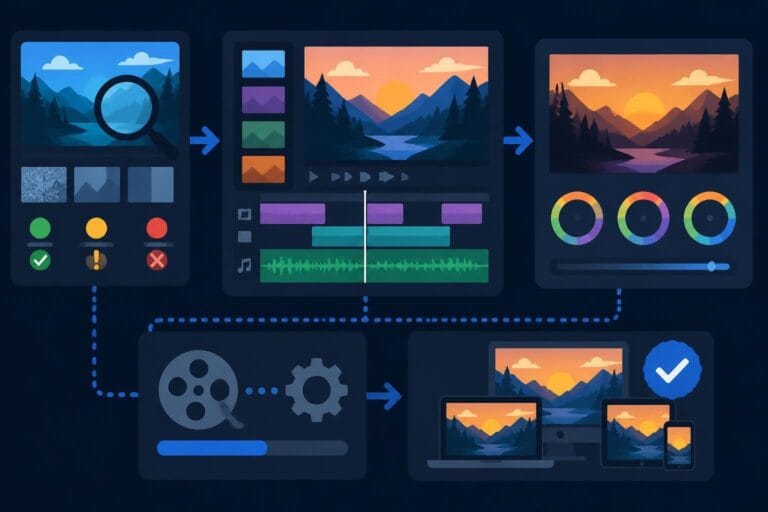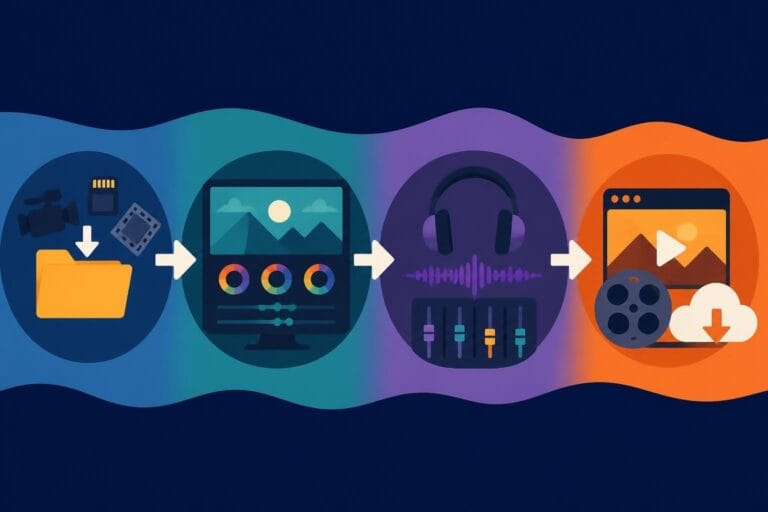
Post Production Video Editing: Complete Guide for 2026
Discover how post production video editing transforms raw footage into professional content. Learn workflows, tools, and outsourcing tips.
10 Min. ReadRead More
5 dedicated editor spots open this week. Book a call to reserve →
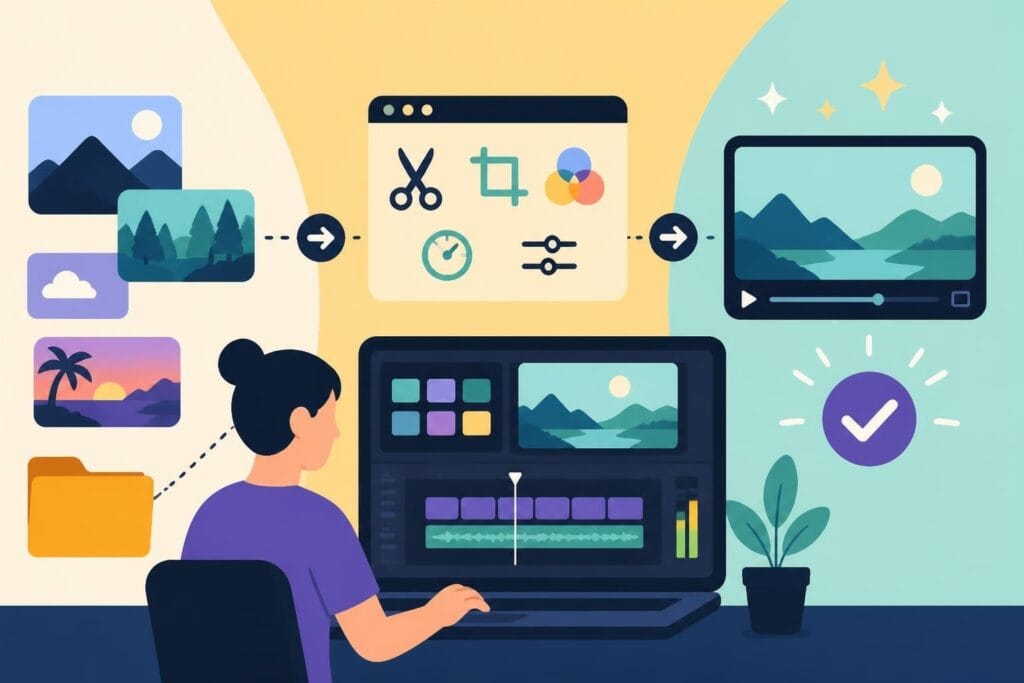
Find the best easy video editor for your content needs. Compare beginner-friendly tools, features, and when outsourcing beats DIY editing.
 Knowledge Base
August 6, 2026
Finding the best easy video editor feels like searching for a unicorn when you're drowning in footage and deadlines. You want something powerful enough to make your content look professional, but simple enough that you're not spending three weeks learning keyboard shortcuts. Whether you're a busy entrepreneur filming product demos, a marketer creating social ads, or an agency juggling multiple client projects, the right editing tool can save you hours of frustration. But here's the real question: should you be editing at all, or is there a smarter way to get your content out there?
The best easy video editor isn't just about drag-and-drop features or pretty interfaces. It's about reducing the cognitive load between your creative vision and the finished video.
Key characteristics that separate truly easy editors from pretenders:
The difference between "easy" and "simple" matters here. Simple tools might limit what you can create. Easy tools give you professional capabilities without the professional complexity. That's the sweet spot most content creators need.
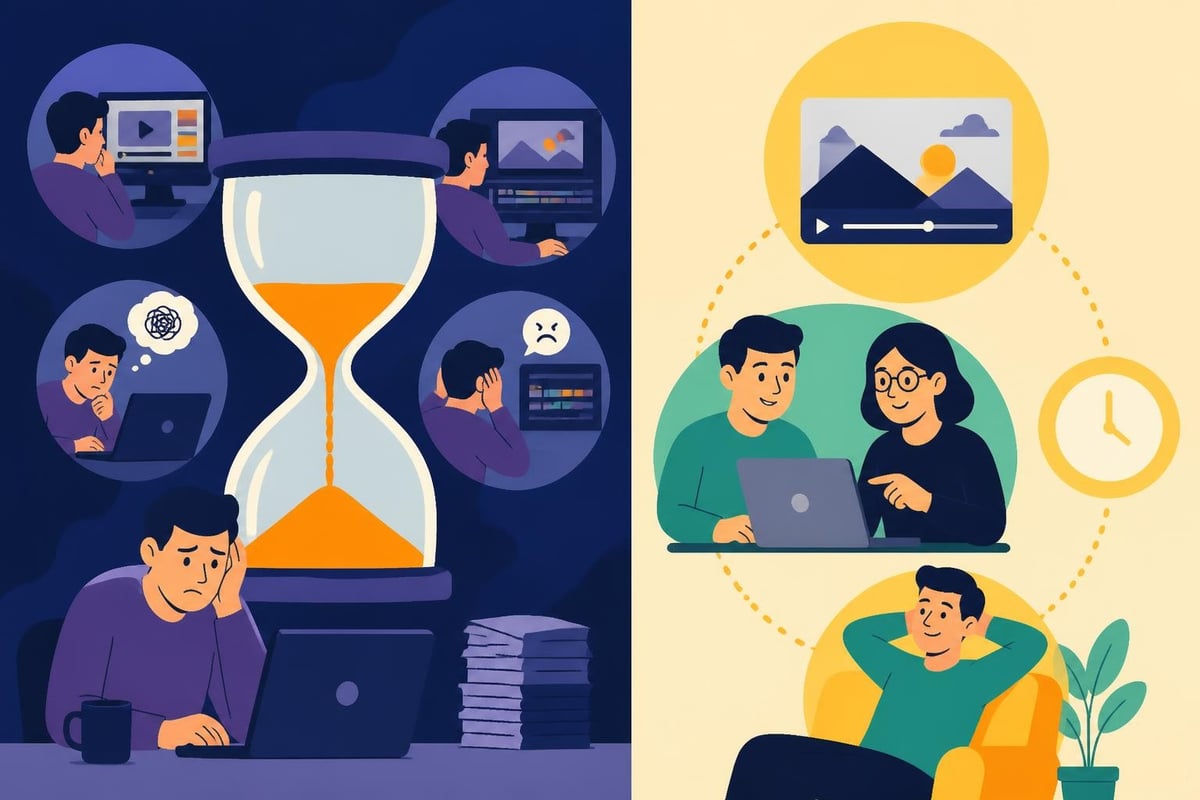
Before we dive into specific tools, let's talk about something nobody mentions in those cheerful software reviews: your time has a dollar value.
If you're spending 4-6 hours editing a 10-minute video, that's 4-6 hours you're not:
Many creators start with free or cheap editing software, thinking they're saving money. But when you calculate hourly rates, that "free" editor might be costing you thousands in opportunity cost. This is exactly why services offering unlimited video editing have exploded in popularity-they turn editing from a time sink into a predictable monthly expense.
Let's break down the actual options if you're determined to edit yourself. These tools represent the current landscape of accessible video editing.
Clipchamp has become Microsoft's official answer to beginner video editing. According to TechRadar’s Clipchamp review, its AI-powered features and Microsoft 365 integration make it particularly appealing for business users who already live in that ecosystem. The interface feels familiar if you've used PowerPoint, which lowers the intimidation factor significantly.
Kapwing takes a different approach, focusing heavily on social media content. TechRadar’s analysis of Kapwing highlights how its AI tools automatically resize videos for different platforms and generate subtitles-massive time-savers for multi-platform creators.
| Editor | Best For | Price Range | Key Advantage |
|---|---|---|---|
| Clipchamp | Microsoft users | Free – $12/month | Office integration |
| Kapwing | Social media creators | Free – $24/month | AI auto-captioning |
| Canva Video | Design-focused brands | Free – $15/month | Template library |
Adobe Premiere Elements 2026 sits in an interesting middle ground. Digital Camera World’s review points out that while it's marketed as beginner-friendly, the feature-rich interface can overwhelm new editors quickly. It's powerful, but "easy" might be overselling it.
Movavi Video Editor 2026 gets praised for striking a better balance. According to reviews, it offers professional-level features without the professional-level headaches. The affordable pricing makes it accessible for creators testing the waters.
For comprehensive comparisons of beginner tools, Miracamp’s guide breaks down the nuances between different software options based on specific use cases.
Forget 8K support and 360-degree VR editing. The best easy video editor for most creators needs these practical features:
Modern content creation isn't a solo sport. You need:
This is where DIY editing starts showing cracks. Even the best easy video editor becomes complicated when you're managing feedback from clients, maintaining brand guidelines across projects, and trying to scale production.
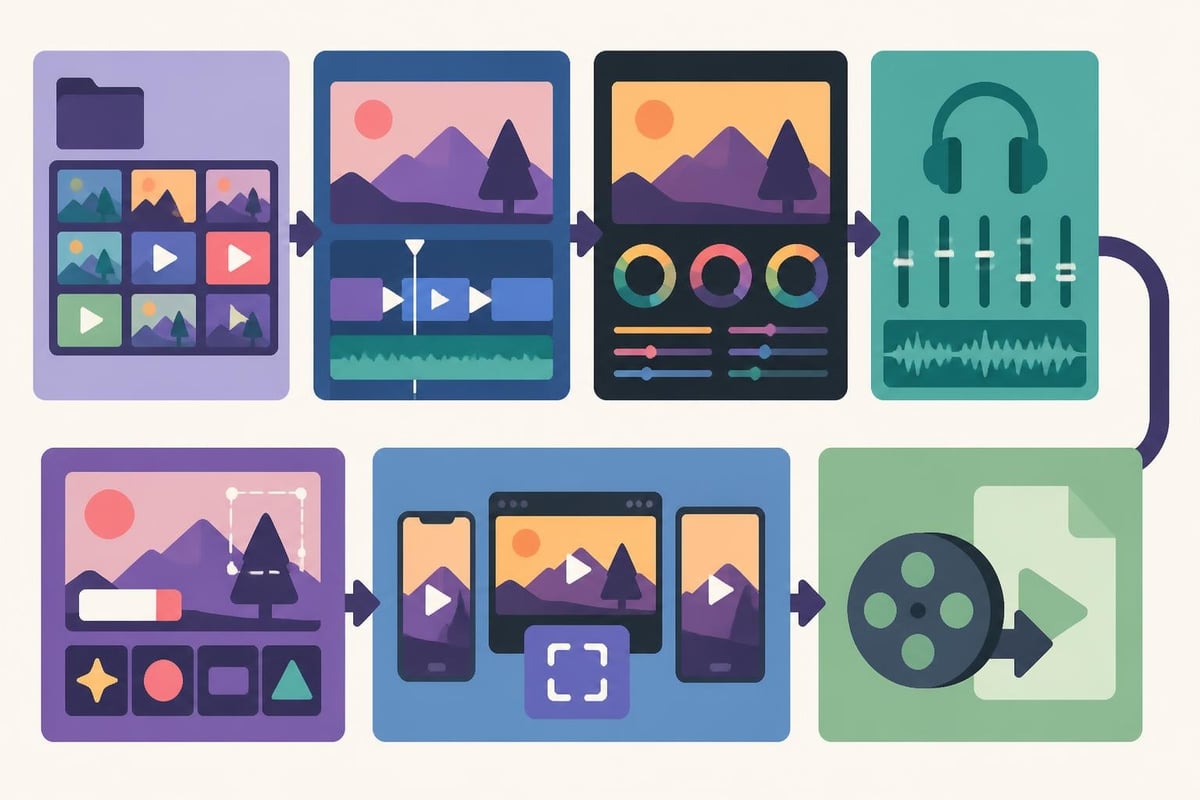
Here's what the software reviews won't tell you: learning any editing tool takes time. Even the most beginner-friendly option requires:
For creators producing weekly content, that's an enormous ongoing investment. You're not just learning once-you're maintaining a technical skill that isn't your core business.
Smart creators are asking: "What if I just film, and someone else handles the technical stuff?"
This is where professional video editing services change the equation entirely. Instead of spending 20 hours learning software, you spend 20 minutes communicating your vision to an experienced editor who already knows every shortcut, every effect, and every export setting.
Consider this comparison:
| Approach | Monthly Time Investment | Learning Curve | Consistency | Scalability |
|---|---|---|---|---|
| DIY Editing | 40-60 hours | Ongoing | Variable | Limited |
| Outsourced Editing | 5-10 hours | Minimal | Professional | Unlimited |
The numbers don't lie. When you check video editing prices, the cost often matches what you'd pay for software subscriptions-except you get back 40+ hours monthly to focus on what actually grows your business.
Different content demands different editing approaches. The best easy video editor for YouTube long-form isn't ideal for Instagram Reels.
Speed is everything. You need quick turnarounds for trending topics and platform-specific formatting.
Tools like Kapwing and CapCut dominate here because they understand social video DNA. Auto-captions, aspect ratio switching, and trending effect libraries are built-in. For creators managing multiple platforms, social media video editing services eliminate the platform-juggling headache.
Brand consistency matters most. Your product demos, testimonials, and ads need to match your visual identity perfectly.
This is where template-based tools help-until you need custom animations or specific brand guidelines. Many businesses discover that e-commerce video editing specialists deliver better ROI than in-house editing attempts.
Storytelling and pacing determine success. A 20-minute video requires different skills than a 30-second clip.
The challenge? This is where "easy" editors often fall short. Maintaining narrative flow, balancing multiple storylines, and managing viewer attention requires editorial judgment, not just technical skill. Many successful YouTube creators hire dedicated editors who understand platform-specific retention strategies.
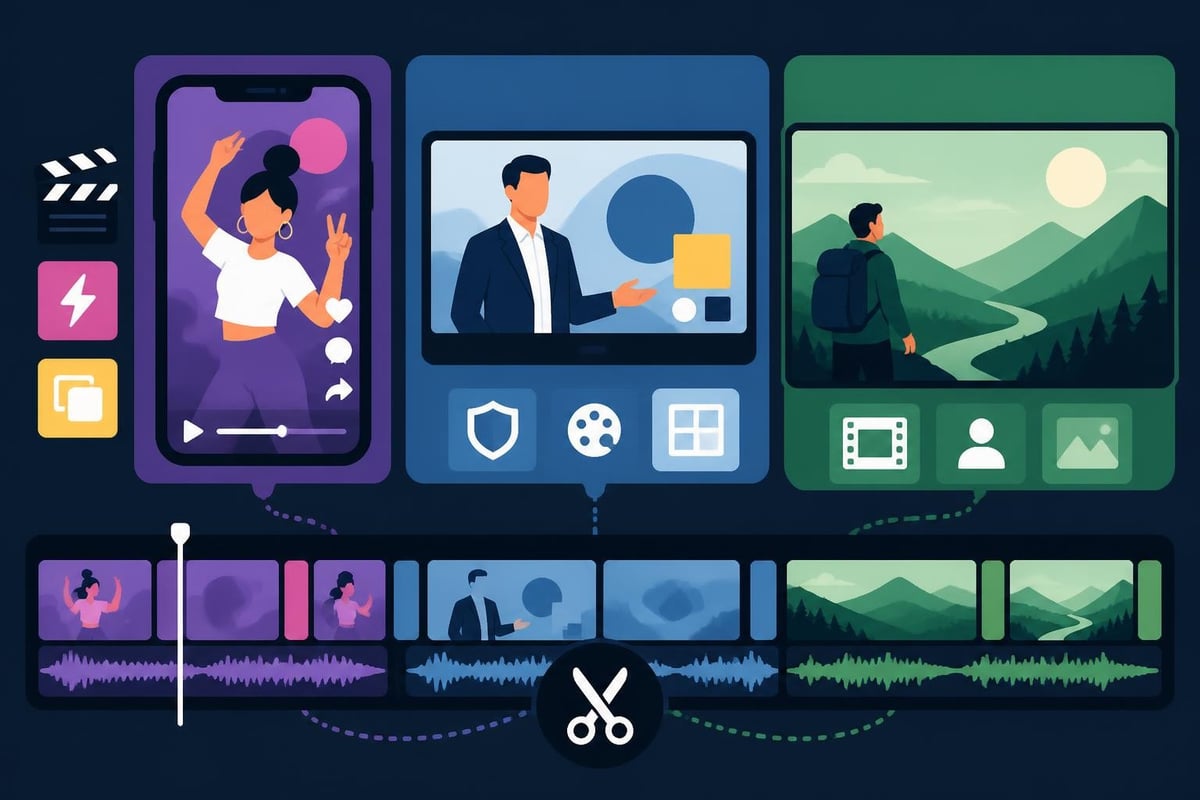
Even with the best easy video editor, there's a massive gap between using the software and creating compelling content.
Technical skills you need:
Creative skills that matter more:
That second list? Those are skills professional editors develop over years. You can learn software in weeks, but editorial judgment takes considerably longer.
The free tier of any video editor isn't really free-it costs you in limitations, watermarks, and upgrade pressure.
Typical free tier restrictions:
Paid tier realities:
Most "affordable" video editors cost $15-30 monthly. Add cloud storage ($10-20), stock footage subscriptions ($15-30), and audio libraries ($10-20), and you're easily at $50-100 monthly before you've edited a single frame.
Compare that to unlimited editing services that include everything-editing, revisions, storage, and asset management-for a flat monthly rate. The math starts making a lot more sense.
The best easy video editor needs to keep pace with constantly changing platform requirements.
Current platform demands:
Staying current with these requirements takes constant attention. Software helps with technical specs, but understanding what actually performs on each platform requires different expertise. Many agencies discovered that LinkedIn video editing specialists deliver better engagement than generic edits.
The best easy video editor doesn't exist in isolation-it needs to play nice with your entire content creation workflow.
When you're jumping between five tools to get one video published, something's broken. This fragmented workflow is why many creators eventually migrate to dedicated services that handle the entire pipeline.
Choosing the best easy video editor depends on honest assessment of your situation.
Choose DIY software if:
Consider outsourcing if:
For those exploring professional editing platforms, the decision often comes down to valuing your time correctly. If you bill $100/hour for client work but spend 6 hours editing a video you could outsource for $150, you're losing money.
Every video editor in 2026 claims AI-powered features. Some actually deliver value.
Actually useful AI features:
Still-developing AI features:
The sweet spot? AI handling tedious technical tasks while humans make creative decisions. This is exactly how professional services work-combining AI efficiency with human editorial judgment.
Beyond software subscriptions, DIY editing carries costs that don't appear on invoices:
Opportunity costs:
Mental costs:
Quality costs:
When you add up the real costs, the best easy video editor might not be software at all-it might be a dedicated person or team handling it for you.
For those setting up custom home cinema systems from ANR Media, having professionally edited content to showcase your installations becomes crucial for attracting high-end clients.
Mobile editing apps have improved dramatically, but they're still not replacements for proper editing workflows.
When mobile editing works:
When mobile editing fails:
Mobile apps are great supplements, terrible primary tools. They're perfect for the content creator filming a quick Instagram Story, not ideal for anyone producing regular long-form content.
The best easy video editor includes quality learning resources. Software without good tutorials becomes unusable software.
Evaluation criteria:
Check how software companies support beginners. Do they have comprehensive video libraries? Active forums? Or just generic "contact us" forms that go nowhere?
Compare that to working with dedicated editors who communicate directly, understand your feedback, and implement changes without requiring you to learn technical terminology.
Finding the best easy video editor ultimately depends on whether you want to be a video editor or a content creator. The tools exist, they're better than ever, and they can absolutely help you create great content. But they require time, energy, and ongoing learning that pulls you away from your core business. If you'd rather spend your time creating content, building relationships, and growing your brand instead of wrestling with timelines and render settings, beCreatives offers unlimited video editing with dedicated editors who handle the technical complexity while you focus on what you do best. No software to learn, no rendering to wait for-just send your footage and get back polished videos ready to publish.
Discover how post production video editing transforms raw footage into professional content. Learn workflows, tools, and outsourcing tips.
Master video editing HD quality standards, encoding settings, and workflow best practices to deliver professional content in 2026.
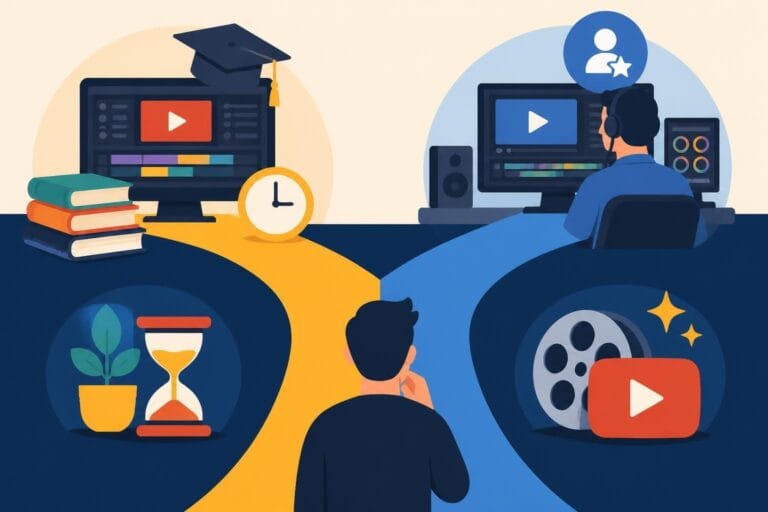
Discover what makes a YouTube video editing course worth your time in 2026, plus smarter alternatives for busy creators and agencies.
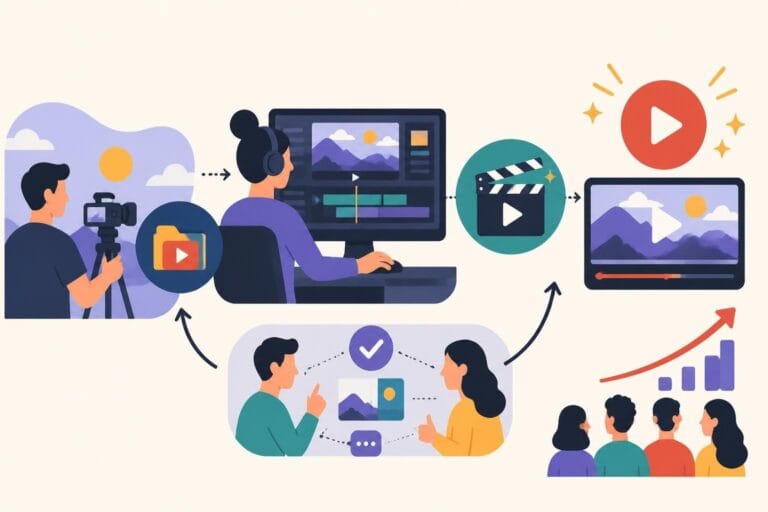
Looking to hire video editor for YouTube? Discover the best hiring strategies, what to look for, and how to build a winning content team in 2026.
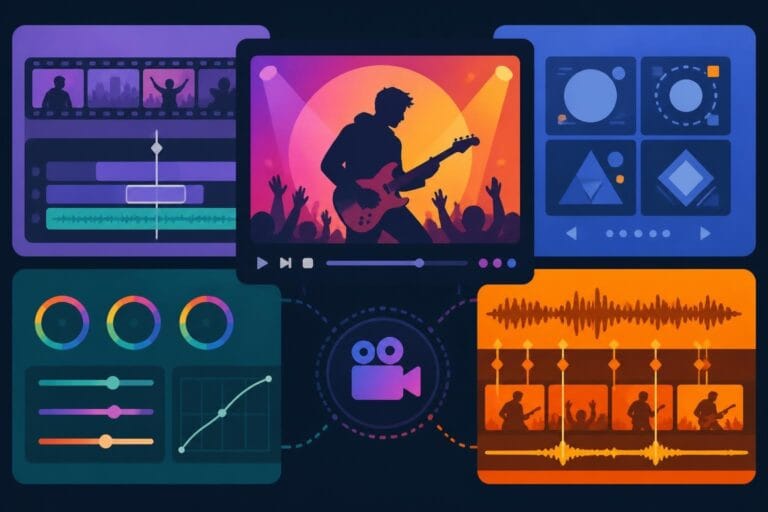
Discover the best music video editing software for 2026. Compare features, pricing, and workflow tools to create stunning music videos faster.
Looking for a video editing company near me? Learn how to choose the right partner, what to expect, and whether local is best in 2026.
Discover how video editing AI online is changing content creation in 2026. Explore smart tools, workflows, and what creators really need to know.
Master wedding videography editing with expert tips on storytelling, pacing, and delivery. Learn how to transform raw footage into cinematic films.
Choosing an HD video editing app in 2026? Discover features, performance tips, and how professionals handle high-definition content.
Discover the best free simple editing software for videos and photos in 2026. Compare features, learn what works, and decide when to DIY or outsource.

Editing videos yourself can take a lot of your precious time, but do not worry – we‘ve got you covered! Our highly skilled Video Editors are here to speed up the process and give you time to create more content.
What do you need edits for?


Scratch to see who you got
This is your match, not your assignment.
We confirm your editor once you subscribe.
Pick a time that works and we’ll take it from there.
Open the booking page15 minutes, free