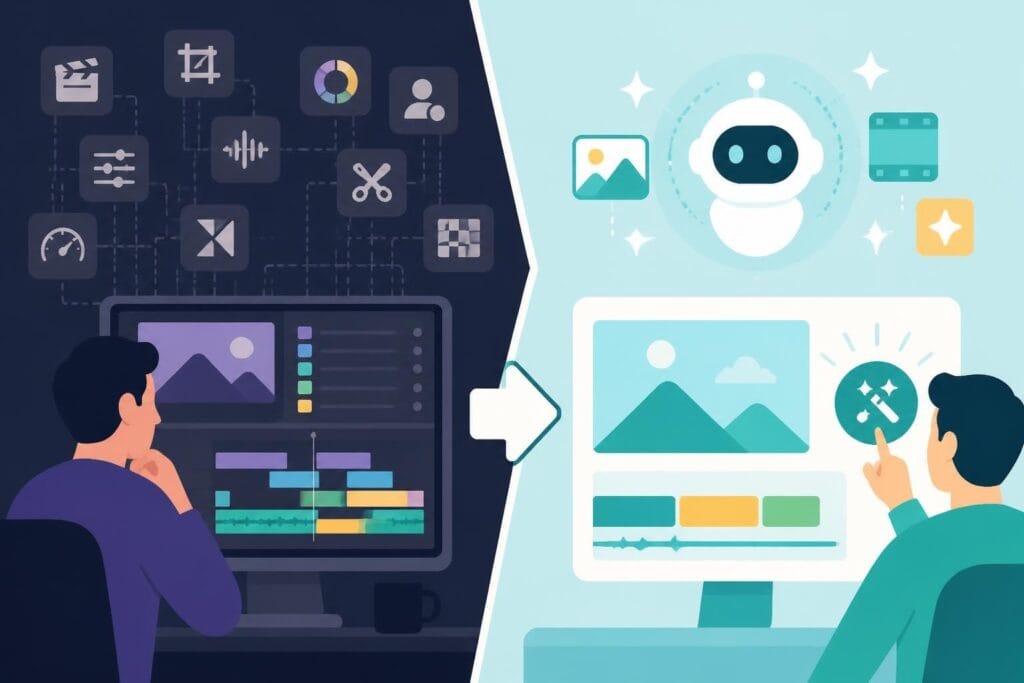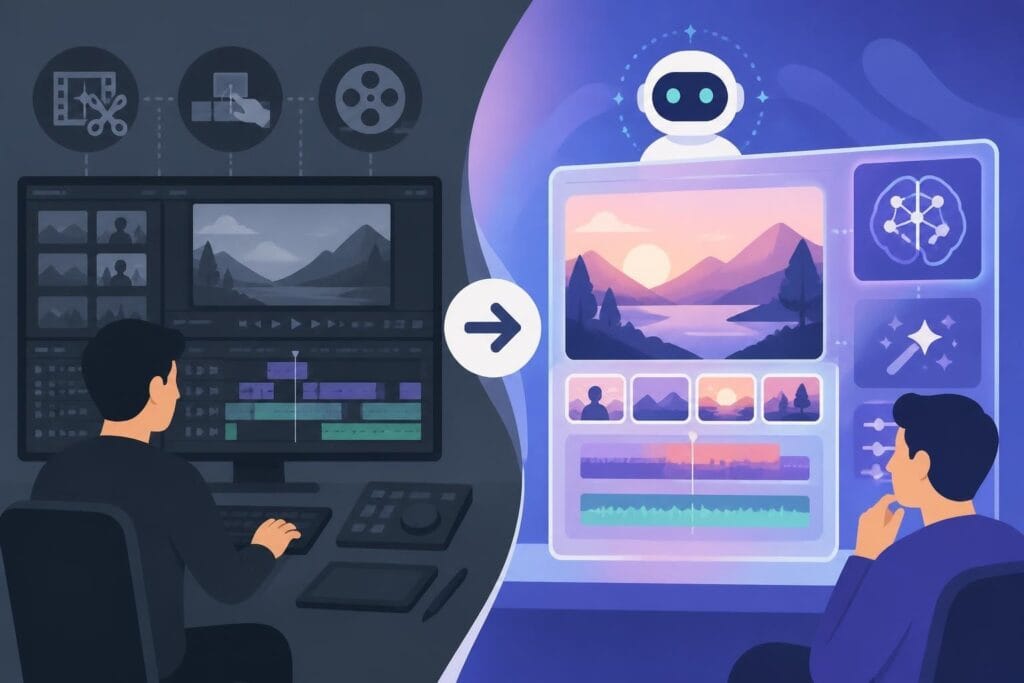
Video creation is moving faster than ever, and if you're a content creator, marketer, or agency owner, you've probably noticed the flood of AI-powered tools promising to transform your workflow. Video editing AI online platforms are popping up everywhere, each claiming to save you hours, automate tedious tasks, and deliver professional results with minimal effort. But here's the truth: while AI can do some impressive things, understanding what it can actually handle versus what still needs a human touch is the difference between streamlining your process and wasting time on tools that don't deliver. Let's dig into what's real, what's hype, and how smart creators are using these technologies in 2026.
What Video Editing AI Online Actually Means Right Now
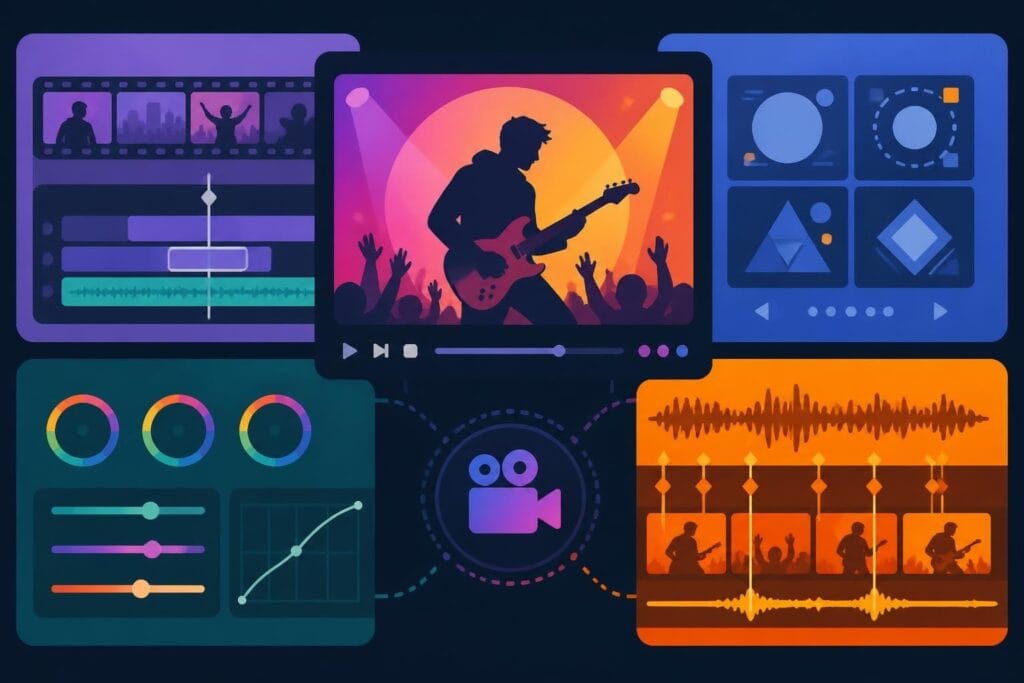
When people talk about video editing AI online, they're usually referring to one of several distinct capabilities. The landscape has gotten confusing because "AI editing" can mean anything from auto-captioning to completely generating video from text prompts.
The main categories breaking down the space include:
- Automated editing assistants that handle repetitive tasks like color correction, audio leveling, or scene detection
- Generative AI tools that create video clips, transitions, or effects from text descriptions
- Intelligent organization systems that tag, sort, and find footage based on content understanding
- Enhancement tools that upscale resolution, remove backgrounds, or stabilize shaky footage
Most platforms you'll encounter in 2026 combine several of these features. Adobe has integrated generative AI capabilities into their professional workflows, showing how established players are adapting alongside newer startups.
The Technical Reality Behind AI Video Tools
The underlying technology has improved dramatically. According to Stanford’s 2025 AI Index Report, generative video models made significant leaps in coherence and quality during 2024-2025, with training costs decreasing while output quality increased.
But here's what the research doesn't always show: most video editing AI online tools still struggle with context, brand consistency, and the nuanced decisions that make content engaging. A comprehensive survey of diffusion-based video editing approaches published in 2024 highlighted ongoing challenges around temporal consistency and fine-grained control.
Where AI Actually Saves Time (And Where It Doesn't)
Let's get practical. If you're evaluating video editing AI online platforms, you need to know what's worth automating and what's better handled by skilled humans.
| Task Type | AI Effectiveness | Human Still Needed? | Best Approach |
|---|---|---|---|
| Auto-captions & transcription | Excellent (95%+ accuracy) | Minor cleanup | Automate fully |
| Color grading basics | Good for consistency | Yes, for creative looks | AI baseline + human polish |
| Scene detection & cuts | Very good | Yes, for pacing | AI suggestions + manual adjustment |
| B-roll selection | Moderate | Absolutely | AI sorting + human selection |
| Pacing & storytelling | Poor to moderate | Critical | Human-led with AI assistance |
| Brand consistency | Poor | Essential | Human oversight required |
The sweet spot for most creators in 2026? Use video editing AI online for the grunt work, but keep humans in control of creative decisions. That's exactly the model that works for agencies and creators who need consistent quality at scale.
Real Workflow Integration
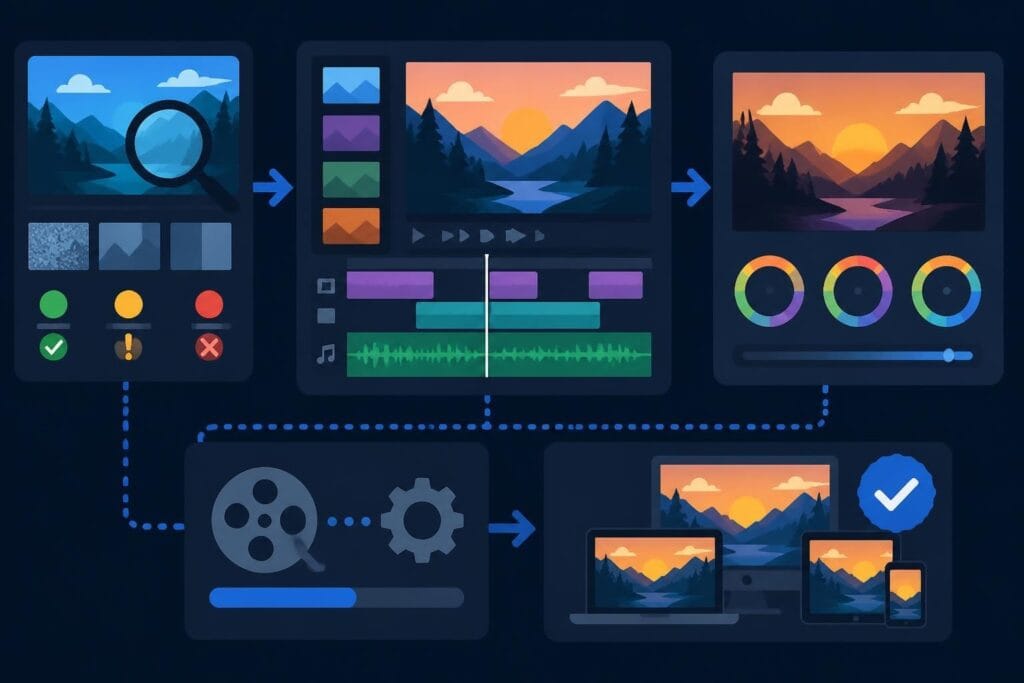
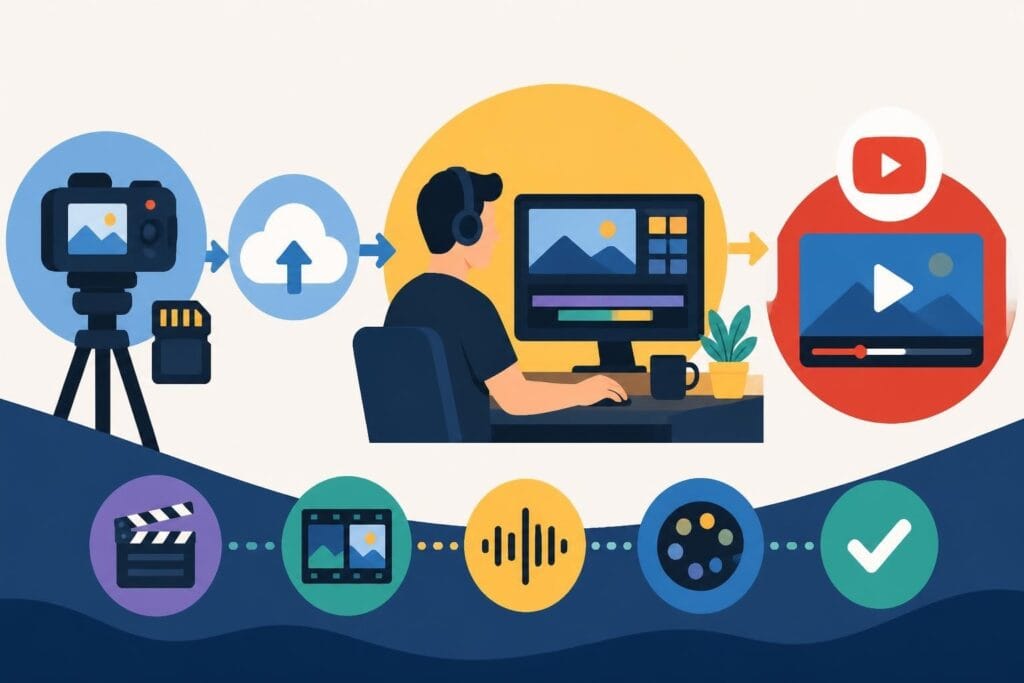
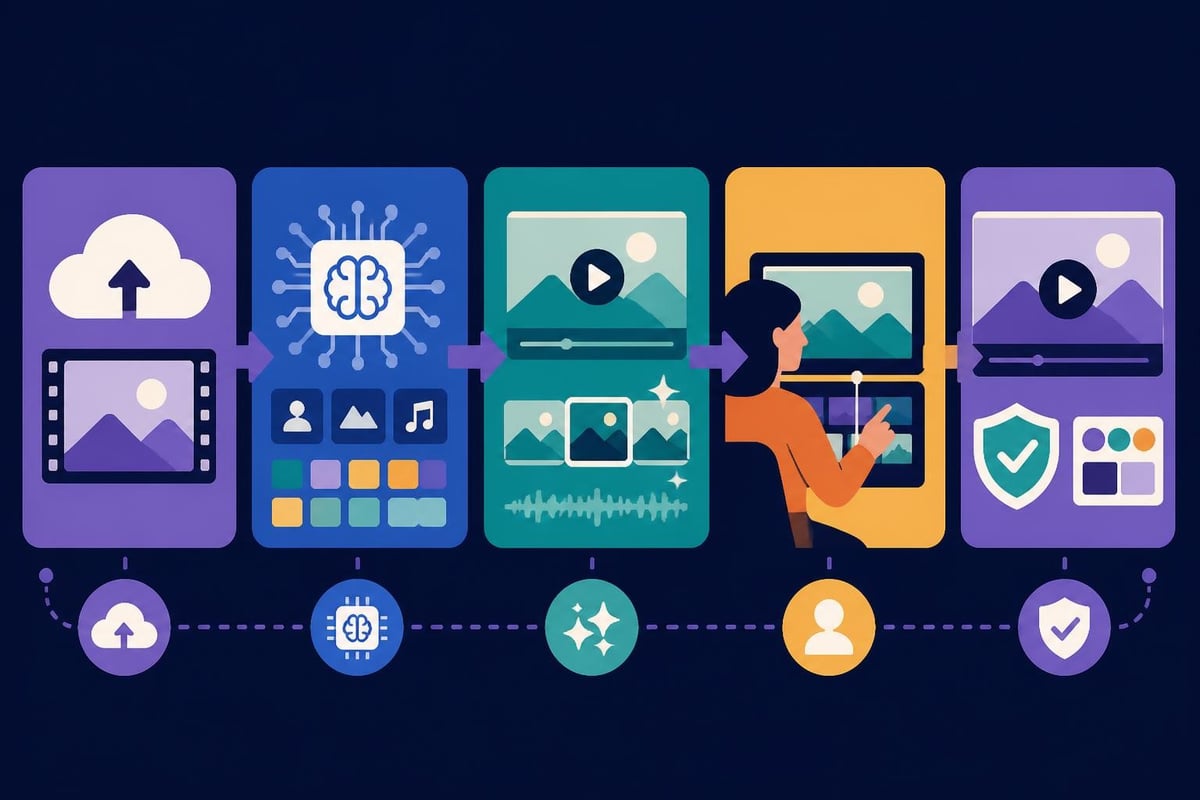
When transforming raw footage into polished content, the smartest approach layers AI capabilities strategically. Start with automated transcription and scene detection to organize your assets. Let AI handle first-pass color correction and audio normalization. Then bring in human judgment for cuts, pacing, storytelling, and brand alignment.
Research from Google on coherent long-form video generation shows that while AI can maintain visual consistency across longer sequences, narrative coherence still requires human guidance. This matches what professional editors report: AI speeds up technical tasks but can't replace editorial judgment.
The Interface Evolution: How You Actually Work with AI Editors
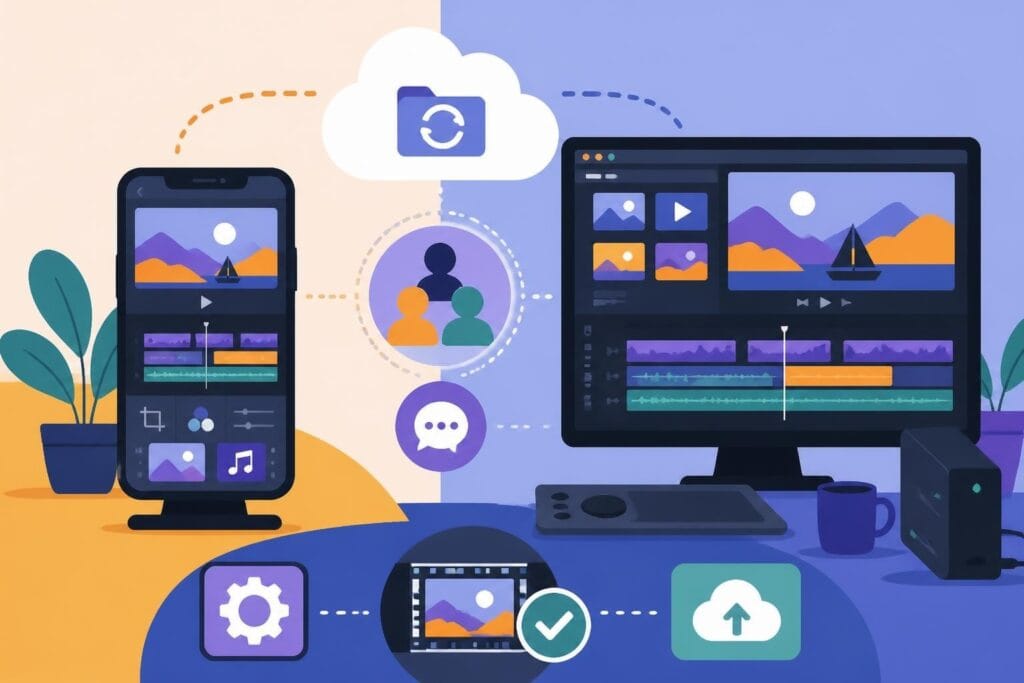
One of the most interesting developments in video editing AI online isn't just what the tools can do, but how they're changing the editing interface itself. Traditional timeline-based editing requires learning complex software. New AI-powered platforms are experimenting with natural language commands, sketch-based controls, and conversational interfaces.
Research on multimodal editing interfaces like ExpressEdit demonstrates how creators can combine natural language descriptions with rough sketches to communicate editing intent. Instead of manually placing keyframes, you might describe "zoom in slowly on the speaker's face when they say 'important point'" and the AI interprets your intent.
This shift matters because:
- It lowers the technical barrier for non-editors
- It speeds up iteration cycles for experienced editors
- It creates new quality control challenges (verifying AI understood your intent)
- It changes what skills matter in video production
For business owners and marketers who aren't professional editors, these interfaces make video editing AI online tools much more accessible. For professional editors, they become power tools that handle tedious microadjustments.
Control vs. Creativity: The Ongoing Balance
Microsoft’s CCEdit research project explores this tension between controllability and creative flexibility. Give users too much control, and the interface becomes as complex as traditional editing. Give AI too much creative freedom, and results become unpredictable and often unusable.
The platforms succeeding in 2026 offer clear constraints. Instead of "make this video better," they prompt for specific parameters: target length, mood, key moments to emphasize, brand guidelines. This structured approach helps AI deliver consistent results while keeping humans in the creative driver's seat.
Quality, Evaluation, and the "Good Enough" Problem
Here's an uncomfortable truth: video editing AI online tools have gotten good enough to produce content that looks professional to most viewers. But "looks professional" and "achieves your business goals" aren't the same thing.
A comprehensive survey of AI-generated video evaluation methods published in late 2024 revealed that current automated quality metrics don't correlate well with human judgments of effectiveness. A video can have perfect technical specs while completely missing the emotional resonance or persuasive flow that drives conversions.
What "Quality" Actually Means for Business Content
For creators and agencies, video quality breaks down into several dimensions:
- Technical quality – Resolution, color accuracy, audio clarity (AI excels here)
- Brand consistency – Visual style, tone, messaging alignment (AI struggles)
- Narrative effectiveness – Pacing, emotional arc, persuasive structure (Requires human skill)
- Platform optimization – Format, length, hook strength for specific channels (Mixed AI/human)
Most video editing AI online platforms nail the technical quality. Some are getting better at platform optimization, automatically reformatting content for different social channels. Almost none can reliably handle brand consistency or narrative effectiveness without significant human oversight.
This creates a dangerous trap: automated tools can produce high volumes of technically perfect but strategically ineffective content. Without someone who understands your brand, audience, and goals making editorial decisions, you end up with lots of video that doesn't perform.
The Legal and Ethical Landscape in 2026
As video editing AI online becomes more powerful, the legal questions get murkier. Who owns rights to AI-edited content? What happens when AI tools are trained on copyrighted material? How do you ensure AI-generated elements don't inadvertently violate someone else's intellectual property?
WIPO’s guidance on generative AI and intellectual property provides authoritative perspective on these challenges. The short version: legal frameworks haven't caught up with the technology, creating uncertainty for creators and businesses.
Key concerns for anyone using AI editing tools:
- Verify the tool provider's terms regarding ownership of outputs
- Understand what training data the AI models were built on
- Keep human editorial control to maintain copyright claims
- Document your creative process if you might need to defend IP rights
This isn't just theoretical. As WIRED’s analysis of AI adoption in Hollywood shows, production companies are already navigating complex negotiations around AI-generated content, rights, and residuals. What happens at the industry level eventually affects independent creators too.
Integration with Professional Workflows
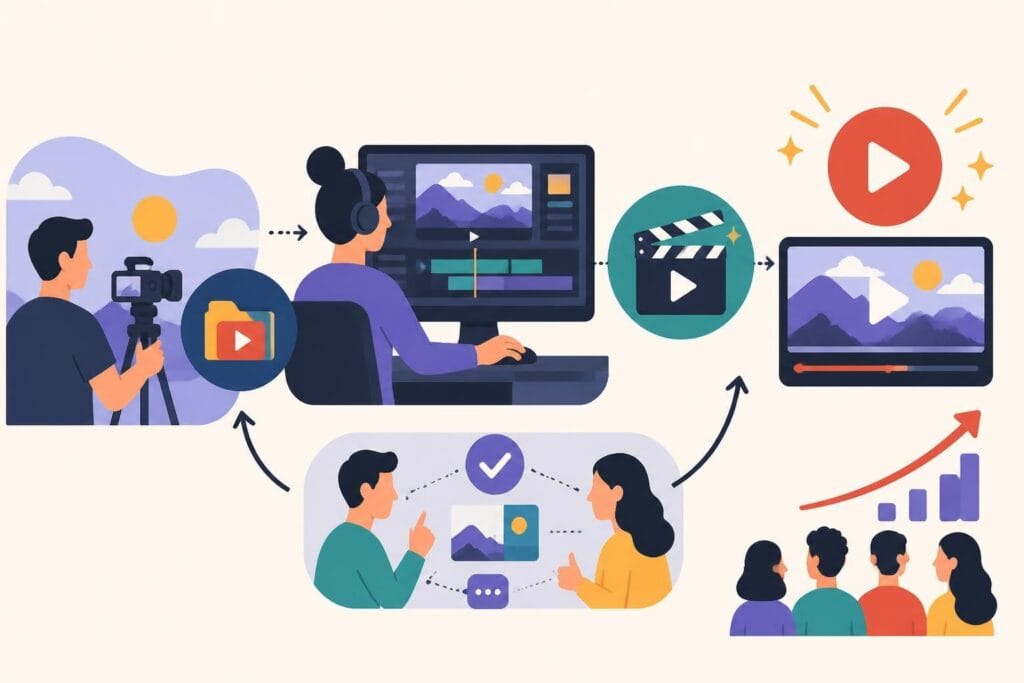
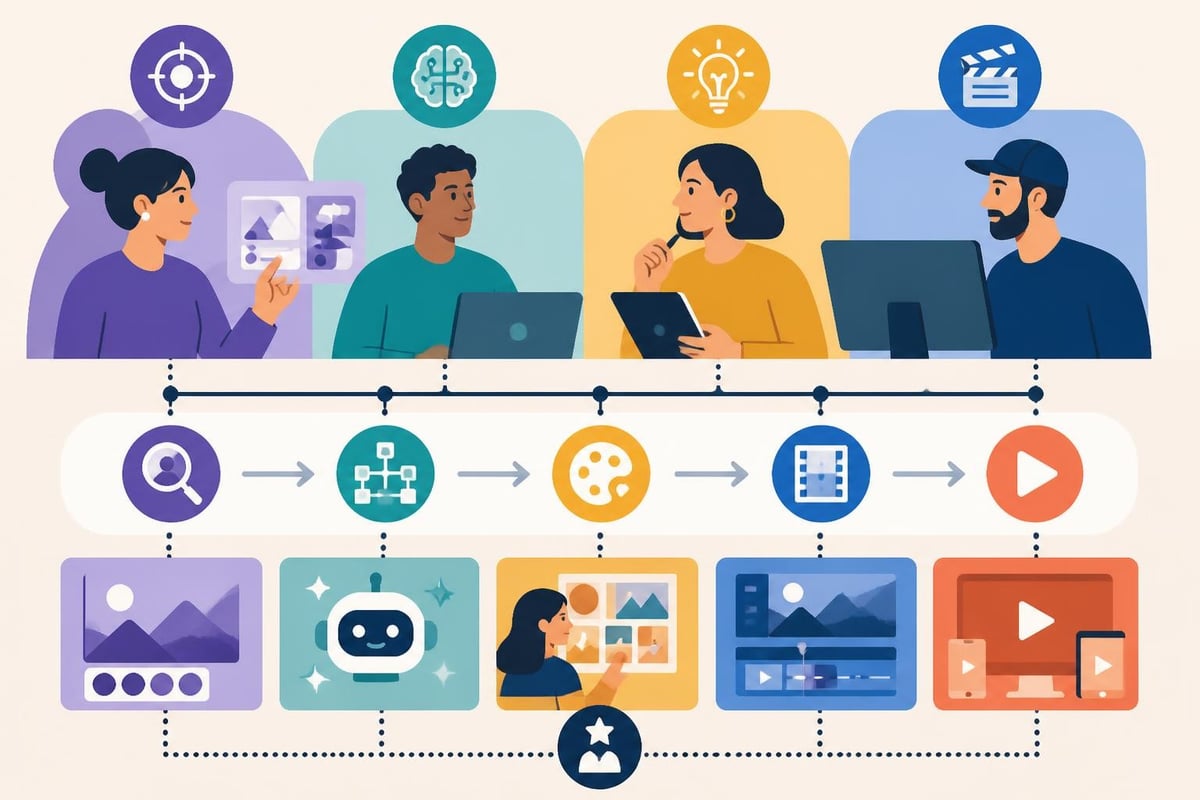
For agencies and serious creators, video editing AI online isn't replacing professional workflows. It's being integrated into them strategically. The question isn't "AI or human editors?" but rather "which tasks for which tool?"
Professional setups in 2026 typically look like this:
- Ingestion & organization: AI automatically transcribes, tags, and organizes raw footage
- Assembly rough cut: AI creates initial sequence based on script or brief
- Creative editing: Human editors refine pacing, adjust story flow, ensure brand consistency
- Technical polish: AI handles color grading baselines, audio normalization, format exports
- Review & iteration: Human oversight confirms quality and makes final adjustments
This hybrid approach combines the speed of automation with the judgment of skilled editors. It's why services like beCreatives remain valuable even as AI tools proliferate – having dedicated human editors who understand your brand and goals delivers results that pure automation can't match.
The Role of Specialized Expertise
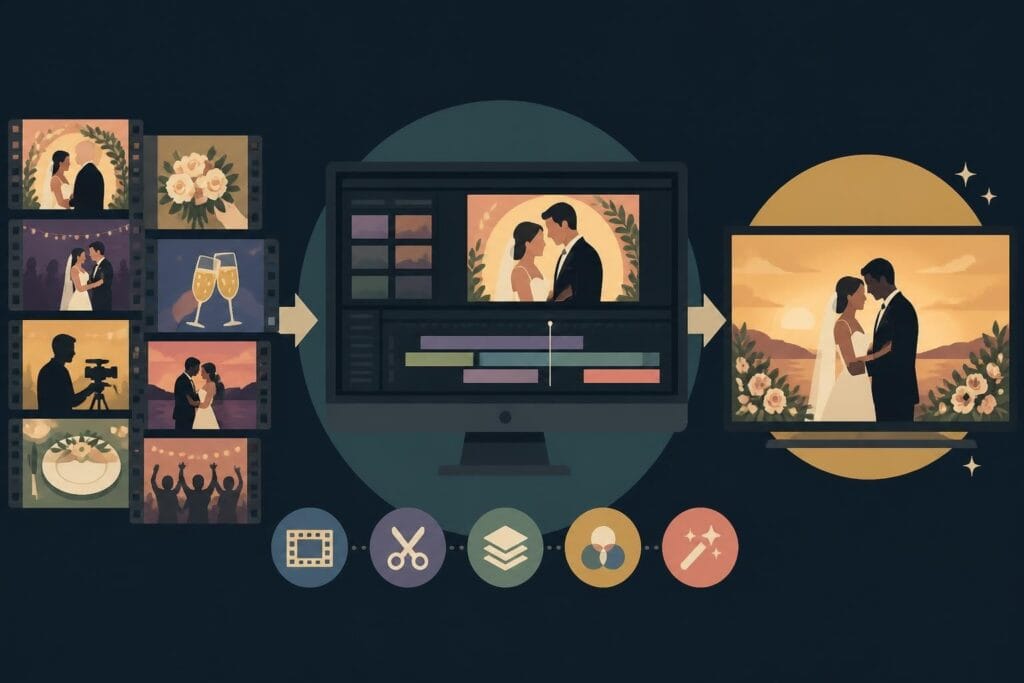
Different content types need different approaches. Sports video editing requires understanding of pacing, highlight selection, and audience expectations that's hard to program into AI. Wedding videography needs emotional storytelling and moment selection that automated tools miss. Travel video content demands geographic knowledge and cultural sensitivity.
Video editing AI online tools work best as assistants to skilled editors who bring domain expertise. The AI handles time-consuming technical tasks; the human brings creative judgment and specialized knowledge.
Cost Considerations: What You're Really Paying For
When evaluating video editing AI online platforms, pricing structures vary wildly. Some charge per video, others offer subscriptions with usage caps, and some follow consumption-based models tied to processing time or features used.
Common pricing models you'll encounter:
| Model | Typical Cost Range | Best For | Watch Out For |
|---|---|---|---|
| Per-video | $20-200/video | Occasional needs | Volume quickly gets expensive |
| Monthly subscription | $50-500/month | Regular content creation | Feature limitations, usage caps |
| Usage-based | $0.10-2.00/minute processed | Variable workload | Costs spike unpredictably |
| Unlimited plans | $300-2000/month | High-volume creators | Quality inconsistency, limited support |
Here's what most pricing comparisons miss: your time cost. If a video editing AI online tool saves you three hours but produces content that needs two hours of fixing, you haven't saved anything. If it delivers 80% quality in 20 minutes, freeing you for strategic work, that's a real win.
For many businesses, understanding video editing pricing means looking beyond software subscriptions to the total cost of producing effective content. Sometimes paying for skilled human editors delivers better ROI than struggling with AI tools that require constant supervision.
What's Coming Next: Realistic Predictions for Late 2026 and Beyond
The video editing AI online space is evolving rapidly, but not always in the directions marketing hype suggests. Based on current research trajectories and market signals, here's what's actually likely:
Near-term improvements (next 6-12 months):
- Better temporal consistency across longer videos
- More reliable brand style transfer and consistency
- Improved natural language understanding for editing instructions
- Tighter integration with existing professional tools
Still challenging (12-24+ months out):
- Automated storytelling that matches human emotional intelligence
- Reliable context awareness for brand-specific editing decisions
- Handling complex multi-speaker content without supervision
- Generating truly original creative concepts vs. remixing existing patterns
Adobe’s ongoing research in controllable AI video generation shows the industry is focused on giving users finer control rather than pushing for full automation. This suggests a future where AI augments human creativity rather than replacing it.
Making Smart Decisions About AI Video Tools
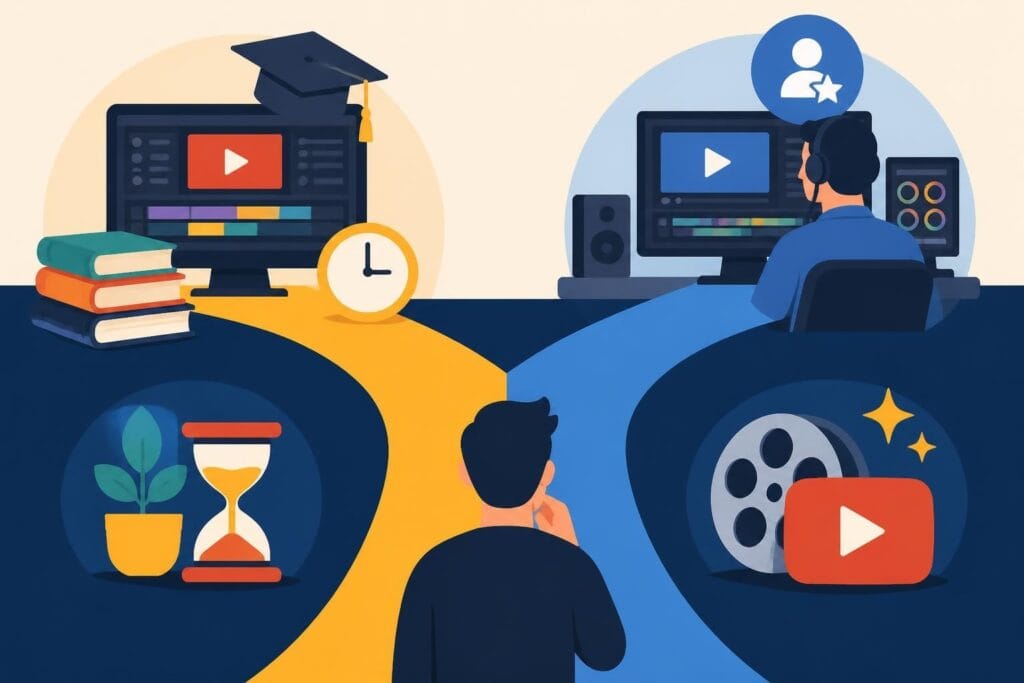
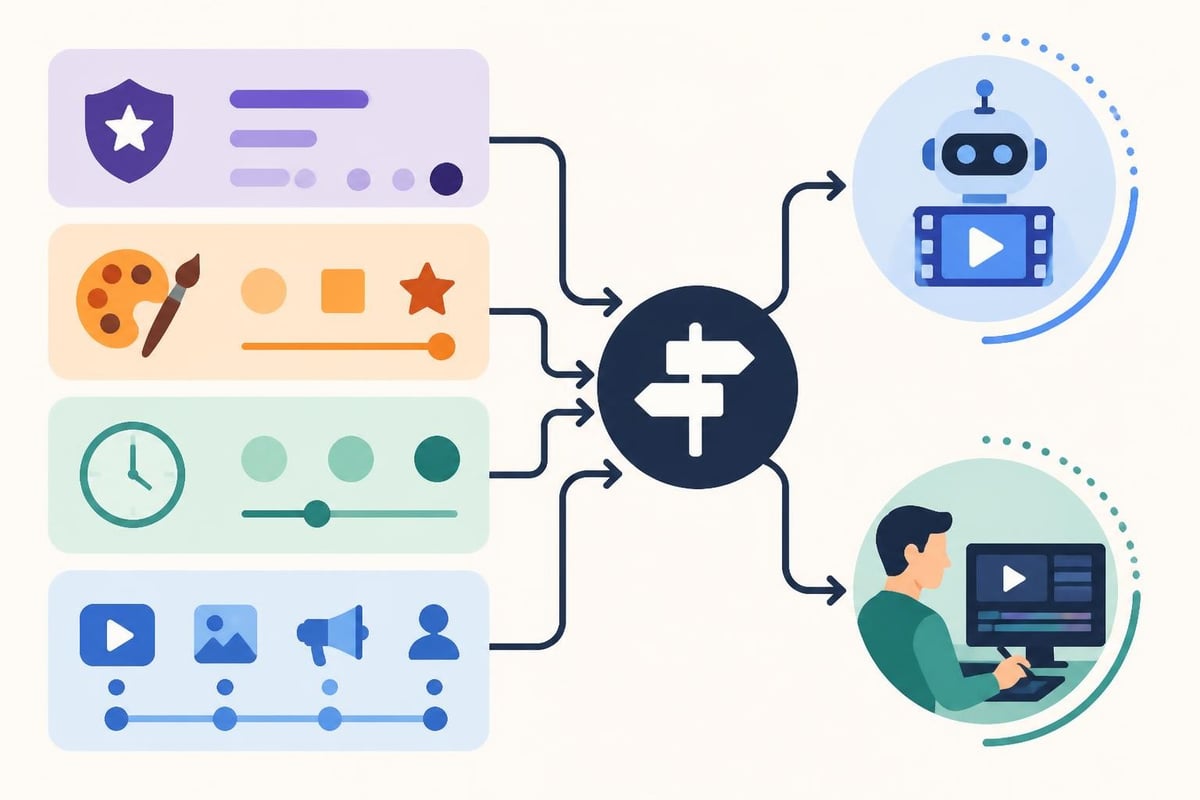
If you're a creator, marketer, or agency trying to navigate the video editing AI online landscape in 2026, here's your decision framework:
Use AI tools when:
- You have high-volume, formulaic content needs (social clips, quick updates)
- Technical consistency matters more than creative differentiation
- Speed to publication is critical and you can accept "good enough" quality
- You need help organizing and tagging large amounts of footage
- Budget constraints prevent hiring professional editors for every project
Stick with human editors when:
- Brand consistency and strategic messaging are critical
- Content needs to drive specific business outcomes (conversions, leads, sales)
- You're building long-term audience relationships requiring emotional connection
- Legal, compliance, or reputational risks are significant
- Creative differentiation is your competitive advantage
Consider hybrid approaches when:
- You need both volume and quality
- Different content types have different requirements
- You want to scale without sacrificing brand standards
- You're building content systems for long-term growth
For most serious content operations, that hybrid approach wins. Let AI handle the tedious stuff. Keep humans driving creative and strategic decisions. It's not about choosing between technology and people – it's about combining both intelligently.
The Human Element Still Matters Most
Despite all the advances in video editing AI online capabilities, what separates content that performs from content that flops usually comes down to human judgment. Understanding your audience. Knowing what story to tell. Recognizing which moments matter. Making strategic decisions about pacing, emphasis, and emotional arc.
These aren't technical skills that AI can easily replicate. They come from experience, domain knowledge, and genuine understanding of what your audience cares about. Whether you're creating engaging end screens or crafting complete narrative arcs, human insight drives results.
That's why even as AI tools become more capable, demand for skilled video editors continues growing. The editors who thrive aren't fighting AI – they're using it to handle grunt work while they focus on creative and strategic decisions that actually move business metrics.
For creators juggling multiple responsibilities, this evolution creates opportunity. You don't need to become a technical editing expert when AI can handle the mechanics. But you do need access to editorial judgment and brand expertise – whether that's developing it yourself or partnering with editing services that provide it.
Video editing AI online tools have made real progress, but they work best as assistants to skilled humans, not replacements. The creators and agencies winning in 2026 combine smart automation with expert editorial judgment to produce content that's both efficient and effective. If you're tired of wrestling with editing tools and want experienced editors who understand your brand, handle the entire process, and deliver consistent quality, beCreatives offers unlimited video editing with dedicated editors, unlimited storage, and seamless communication – so you can focus on creating great content while we handle the editing expertise that turns footage into results.