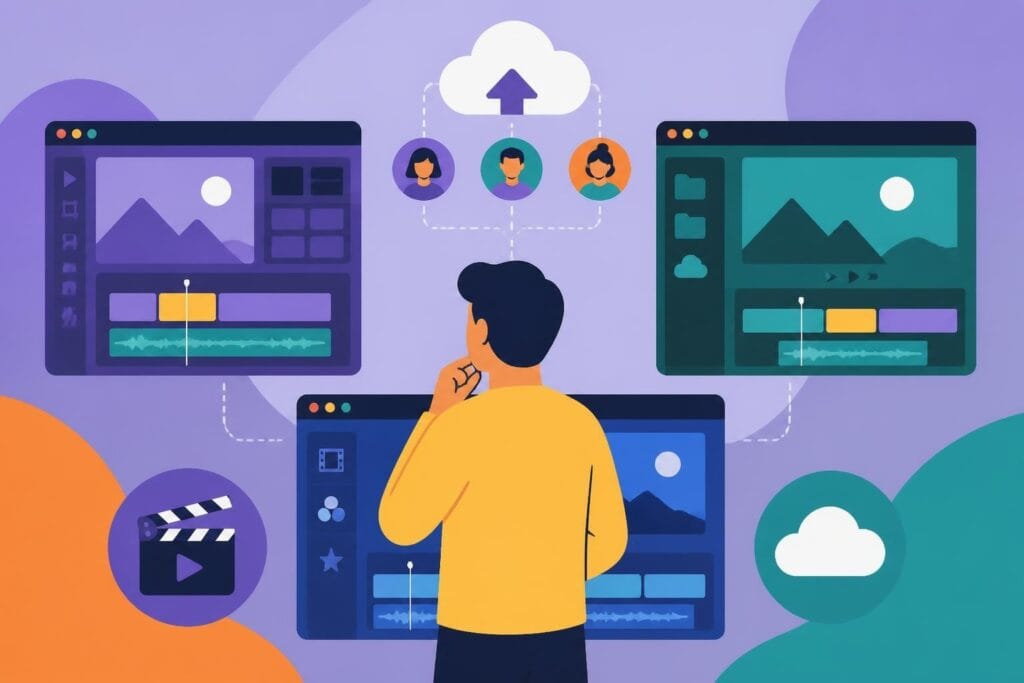
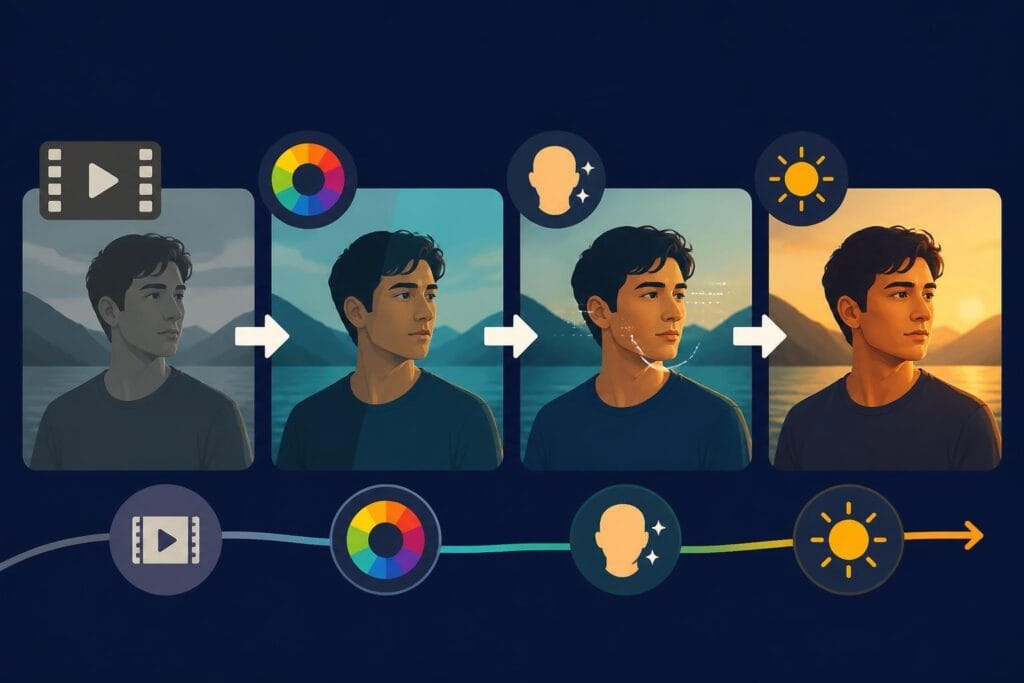
Video content dominates digital marketing and social media in 2026, but raw footage rarely tells the complete story. Professional video retouch has become essential for content creators, marketers, and agencies who want their visual narratives to stand out. This post-production technique involves refining visual elements, correcting imperfections, and enhancing overall aesthetic quality to deliver content that captures attention and maintains viewer engagement. Whether you’re producing brand videos, YouTube content, or social media reels, understanding the fundamentals of video retouching will transform your production quality.
Understanding the Core Elements of Video Retouch
Video retouch encompasses multiple techniques that work together to polish your final product. Unlike simple filters or one-click adjustments, professional retouching requires a systematic approach to various visual elements.
Color correction forms the foundation of any video retouch workflow. This process ensures consistent color temperature, balanced exposure, and accurate skin tones across all footage. The significance of video retouching extends beyond mere aesthetics-it directly impacts viewer perception and brand consistency.
Primary Retouching Categories
Professional editors focus on several key areas when performing video retouch work:
- Skin refinement to smooth textures while maintaining natural appearance
- Lighting adjustments to enhance shadows and highlights
- Blemish removal for flawless subject presentation
- Color grading to establish mood and visual identity
- Stabilization to reduce unwanted camera movement
Each element requires specific tools and techniques. Modern software solutions offer unprecedented control over these variables, allowing editors to achieve results that were impossible just a few years ago.
Advanced Techniques for Professional Results
The technical aspects of video retouch have evolved dramatically with artificial intelligence and machine learning integration. Video skin retouching now utilizes algorithms that identify and correct imperfections while preserving natural skin texture and detail.
Precision Skin Work
Achieving natural-looking skin retouching in video presents unique challenges compared to still photography. Motion requires frame-by-frame consistency, which manual retouching cannot efficiently provide at scale.
Modern neural networks can track facial features across thousands of frames, applying adjustments that remain consistent through movement and lighting changes. The Retouch4me Dust OFX plugin exemplifies this technological advancement by automatically removing particles from footage using AI.
| Technique | Best Use Case | Skill Level Required | Time Investment |
|---|---|---|---|
| Manual frame retouching | Close-up beauty shots | Advanced | High |
| AI-assisted correction | General skin smoothing | Intermediate | Low |
| Plugin automation | Dust and particle removal | Beginner | Minimal |
| Color-based masking | Selective skin refinement | Advanced | Medium |
For content creators producing daily or weekly videos, efficiency becomes paramount. Balancing quality with turnaround time requires strategic decisions about which retouching techniques deliver the highest impact for invested effort.
Tools and Software Solutions
The video retouch ecosystem includes professional-grade applications and accessible mobile solutions. Your choice depends on project complexity, budget constraints, and desired output quality.
Professional Desktop Applications
Industry-standard software provides comprehensive toolsets for advanced video retouch operations:
- Adobe Premiere Pro offers robust color correction and tracking capabilities
- DaVinci Resolve excels in color grading and cinematic adjustments
- Final Cut Pro integrates seamless workflows for Mac users
- After Effects handles complex compositing and frame-by-frame work
The review of Evoto AI demonstrates how specialized software can streamline retouching workflows through batch processing and intelligent automation, though its focus remains primarily on still images rather than video.
Mobile and Accessible Solutions
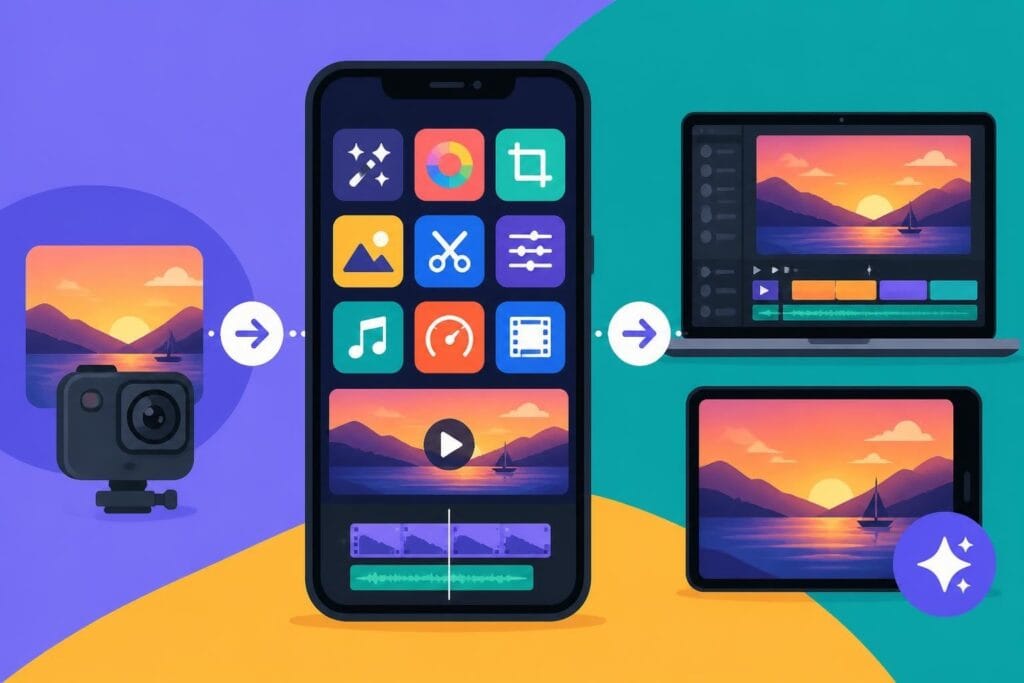
Not every project requires desktop-level power. Top video editing apps now include sophisticated retouching features accessible to creators without extensive technical backgrounds.
These applications typically provide:
- Real-time preview of retouching effects
- Template-based color grading presets
- One-touch skin smoothing algorithms
- Automated lighting optimization
- Social media export optimization
The accessibility revolution in video retouch tools has democratized professional-quality output, though mastery still requires understanding fundamental principles rather than relying solely on automated features.
Building an Efficient Retouching Workflow
Systematic approaches separate professional video retouch operations from amateur efforts. Establishing repeatable processes ensures consistent quality across multiple projects while reducing production time.
Pre-Production Considerations
Quality retouching begins during filming. Proper lighting, camera settings, and subject preparation reduce post-production requirements significantly.
Shoot with retouching in mind by maintaining consistent lighting setups, using higher bitrate codecs that preserve color information, and capturing test footage to establish baseline correction parameters. These preparatory steps streamline the video retouch process considerably.
Post-Production Pipeline
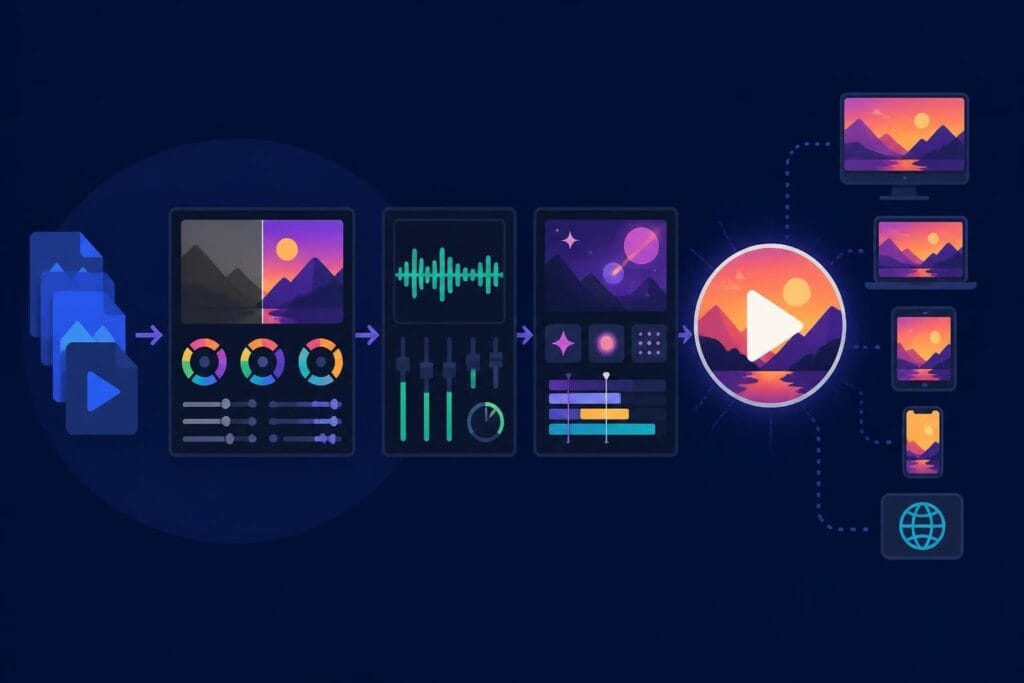
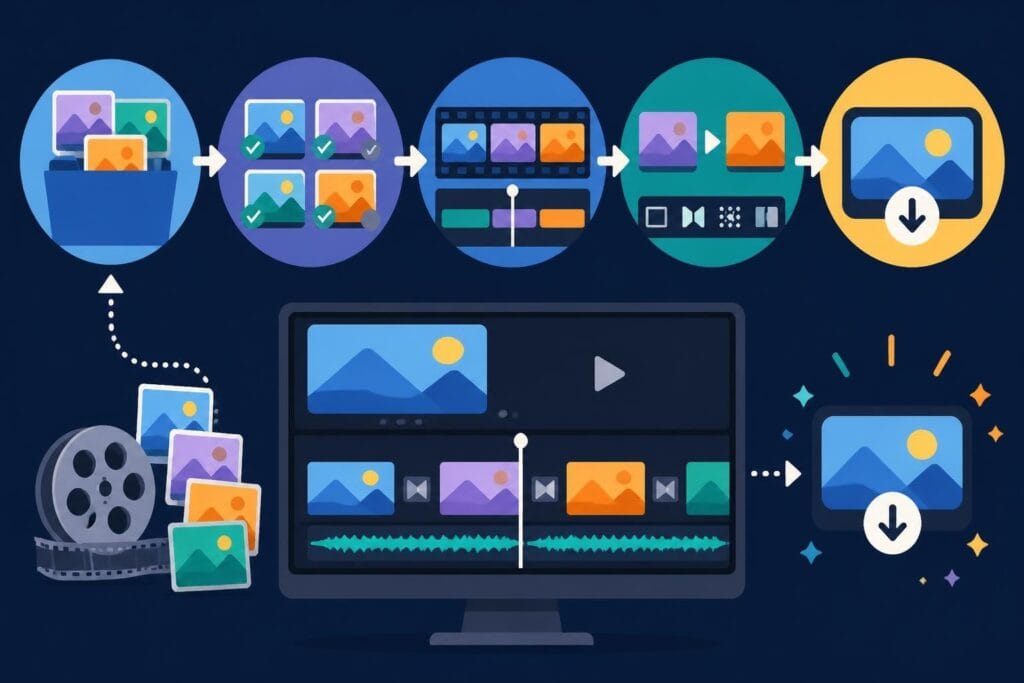
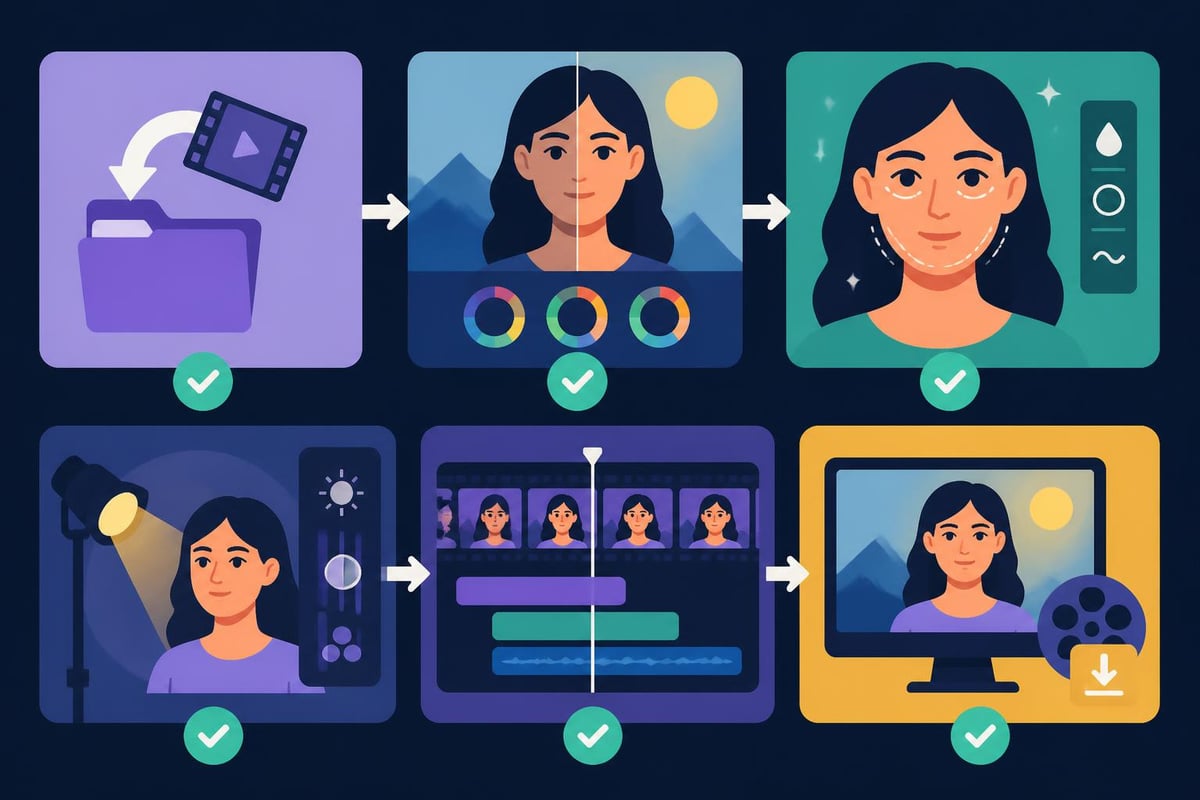
Efficient workflows follow logical sequences that build upon previous corrections:
- Import and organize footage by scene, talent, or date
- Apply primary corrections including exposure and white balance
- Execute secondary adjustments such as selective color grading
- Perform detailed retouching for skin, objects, and backgrounds
- Add creative enhancements like vignettes or film grain
- Export optimized files for intended distribution platforms
The techniques demonstrated for natural-looking portraits translate effectively to video when applied across temporal sequences rather than single frames.
Industry Applications and Use Cases
Different content categories require varying retouching approaches. Understanding these distinctions helps editors prioritize efforts and select appropriate techniques.
Commercial and Brand Content
Corporate video production demands flawless presentation. Product launches, testimonial videos, and brand campaigns cannot afford distracting imperfections or inconsistent color representation.
Professional agencies leverage dedicated teams to handle video retouch requirements at scale. Services like beCreatives provide unlimited editing resources specifically designed for businesses requiring consistent, high-volume output.
Social Media and Influencer Content
Short-form vertical video dominates platforms like TikTok, Instagram Reels, and YouTube Shorts. These formats demand quick turnarounds while maintaining visual appeal that stops mid-scroll viewers.
The video game editing services sector exemplifies specialized retouching needs where gameplay footage requires color enhancement, UI cleanup, and performance optimization.
E-Commerce Video Production
Product demonstration videos combine multiple retouching challenges. Background removal, color accuracy for merchandise representation, and lighting consistency across SKUs require meticulous attention.
For e-commerce merchants leveraging video content, communities like Talk Shop provide valuable insights into conversion-optimized video strategies where retouching quality directly impacts sales performance. The platform’s extensive resources help Shopify merchants understand how professional video presentation influences customer purchasing decisions.
| Content Type | Priority Retouching Areas | Typical Turnaround | Quality Standard |
|---|---|---|---|
| Brand commercials | Complete refinement | 2-4 weeks | Broadcast |
| Social media clips | Skin, color, stabilization | 24-48 hours | High digital |
| Product demos | Color accuracy, backgrounds | 3-5 days | Commercial |
| Tutorial videos | Clarity, consistency | 1-2 days | Professional |
Emerging Technologies and Future Trends
The video retouch landscape continues evolving through artificial intelligence integration and computational photography advances. Understanding emerging capabilities helps creators prepare for upcoming workflow changes.
Neural Network Applications
Research initiatives like VeraRetouch demonstrate how vision-language models can interpret retouching intent from natural language descriptions. This technology promises to simplify complex corrections by allowing editors to describe desired outcomes rather than manually adjusting parameters.
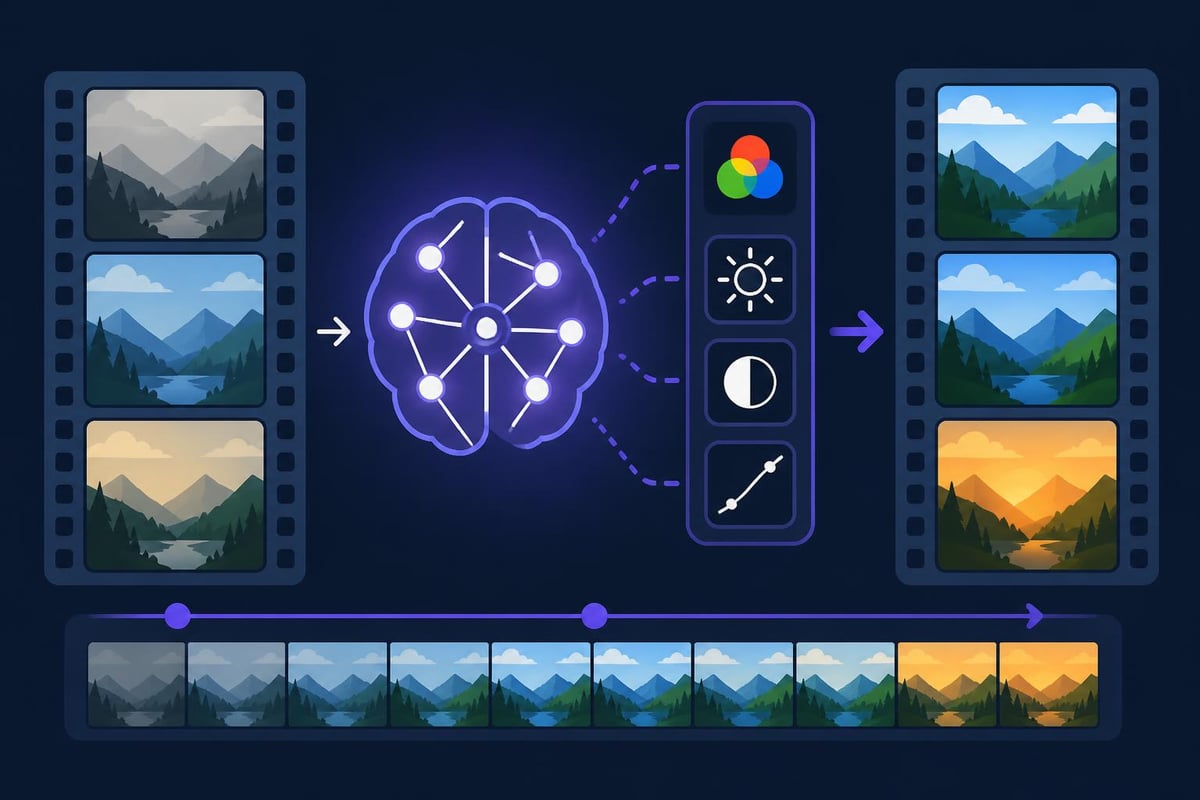
Similarly, NCST neural color style transfer methods enable predictive color grading that maintains interpretable controls for fine-tuning. These innovations bridge the gap between automated efficiency and creative control.
Real-Time Processing
Hardware acceleration through GPU computing and specialized neural processing units enables real-time video retouch during capture. This capability reduces post-production timelines while providing immediate feedback to content creators.
Live streaming applications particularly benefit from real-time retouching, allowing broadcasters to present polished appearances without traditional post-production delays. The technology integrates seamlessly into webcam software and streaming platforms.
Strategic Considerations for Content Teams
Organizations producing video content at scale must balance quality expectations against resource constraints. Strategic planning around video retouch capabilities determines sustainable production capacity.
In-House Versus Outsourced Solutions
Building internal retouching expertise requires significant time and training investments. Staff must continuously update skills as software evolves and new techniques emerge.
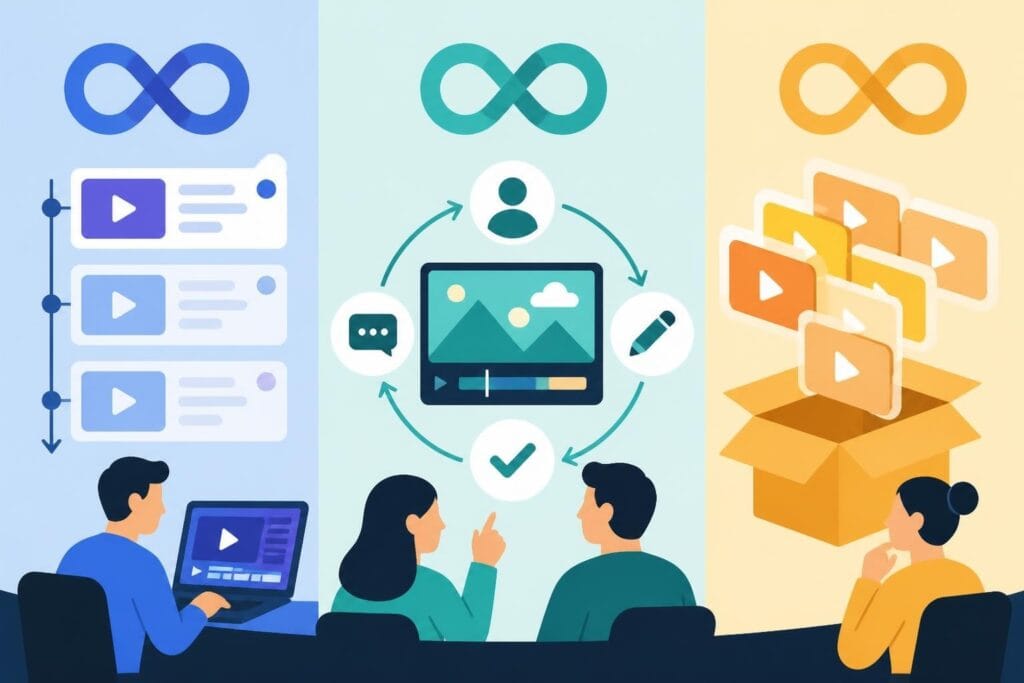
Alternatively, platforms offering unlimited video editing services provide dedicated editors with specialized expertise across diverse retouching requirements. This model delivers consistent quality without overhead associated with hiring, training, and retaining full-time specialists.
Quality Standards and Brand Guidelines
Establishing clear retouching standards ensures consistency across content producers and prevents over-processing that appears artificial. Documentation should specify:
- Acceptable ranges for skin smoothing intensity
- Brand-specific color grading presets
- Reference examples for lighting adjustments
- Quality control checkpoints before publication
Documented workflows accelerate onboarding for new team members while maintaining quality standards as production scales. The beCreatives platform exemplifies this approach through standardized processes that accommodate unlimited revision requests.
Practical Implementation Tips
Translating theoretical knowledge into production practice requires attention to technical details and workflow optimization.
File Management Best Practices
Effective video retouch operations demand organized asset management:
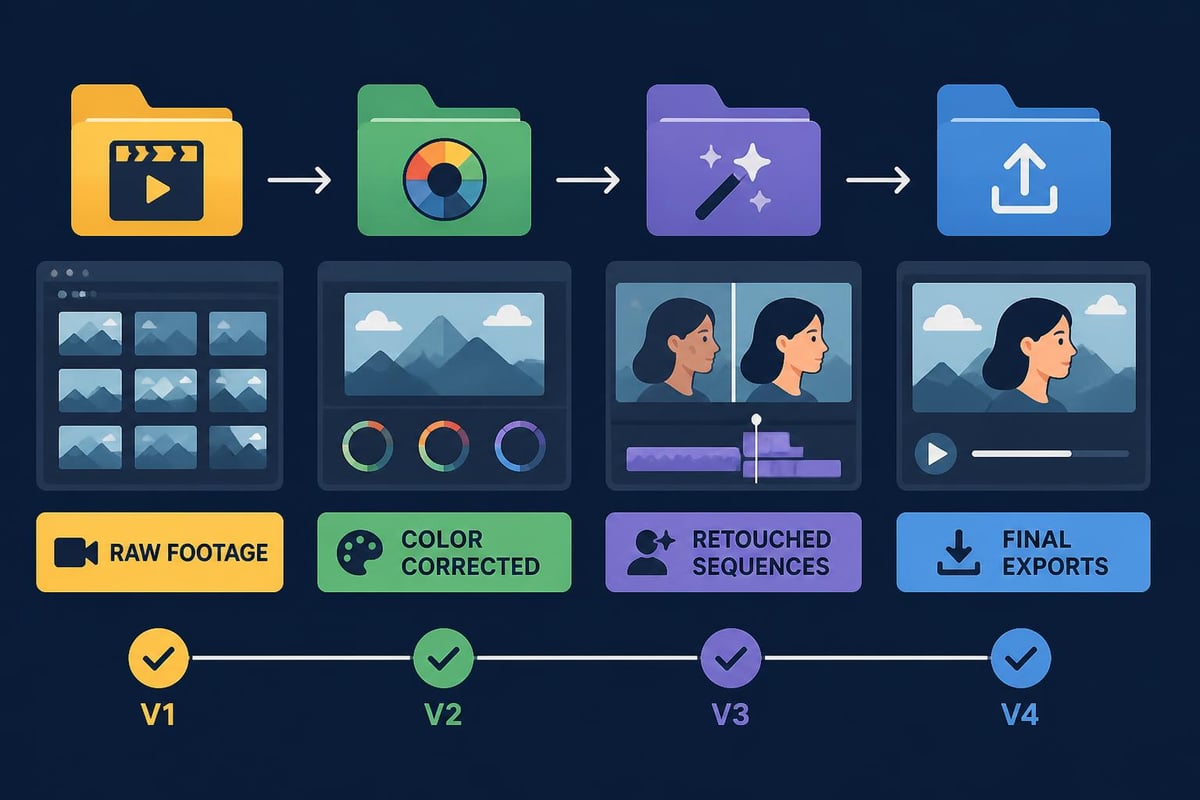
- Maintain original files separate from work-in-progress versions
- Use consistent naming conventions that identify content and version status
- Implement backup redundancy across multiple storage locations
- Archive completed projects with associated assets for future reference
Storage requirements escalate quickly with high-resolution footage and multiple revision cycles. Cloud-based solutions provide accessibility for distributed teams while ensuring data security.
Communication and Revision Protocols
Clear communication between stakeholders prevents wasted effort on misaligned expectations. Structured revision processes should define:
- Initial creative brief with retouching scope
- First draft review with timestamp-specific feedback
- Revision implementation with change documentation
- Final approval sign-off before publication
Platforms designed for video collaboration streamline these exchanges through integrated commenting, version control, and approval workflows.
Performance Optimization
Video retouch operations consume substantial computational resources. Optimizing workflows reduces processing time and hardware strain:
- Work with proxy files during editing, applying effects to full-resolution footage only for final export
- Cache rendered effects to avoid repeated processing
- Utilize background rendering during idle periods
- Distribute processing across multiple workstations when possible
Technical efficiency directly impacts project turnaround capacity, especially for teams managing concurrent productions.
Measuring Retouching Impact
Data-driven decision-making extends to video retouch investments. Tracking performance metrics justifies resource allocation and identifies improvement opportunities.
Engagement Metrics
Compare performance between retouched and unretouched content:
- View-through rates indicating sustained audience attention
- Engagement ratios including likes, comments, and shares
- Conversion metrics for commercial content
- Audience retention graphs showing drop-off points
A/B testing different retouching intensities reveals optimal approaches for specific content types and audience demographics.
Production Efficiency Tracking
Operational metrics assess workflow effectiveness:
- Average time per retouching technique
- Revision request frequency and reasons
- Quality control pass rates
- Editor capacity and throughput
These measurements identify bottlenecks and training opportunities while establishing realistic timeline expectations for stakeholders.
Professional video retouch transforms adequate footage into compelling visual narratives that engage audiences and strengthen brand presence. The techniques, tools, and workflows outlined above provide frameworks for elevating content quality systematically. Whether you’re producing daily social media content or quarterly brand campaigns, partnering with specialists who understand the nuances of modern video retouching ensures consistent results without the overhead of building internal capabilities. beCreatives delivers unlimited video editing with dedicated professionals, streamlined revision systems, and scalable capacity designed specifically for content creators and agencies requiring reliable, high-quality output.