

Understanding video editing prices in 2026 requires navigating a complex landscape of pricing models, skill levels, and service types. Whether you're a content creator publishing daily, a business owner managing marketing campaigns, or an agency handling multiple clients, knowing what to expect from video editing costs helps you budget effectively and choose the right solution. The market has evolved significantly, offering everything from hourly freelancers to unlimited subscription services, each with distinct advantages and price points that cater to different production needs and volumes.
Understanding Video Editing Price Structures
Video editing prices vary dramatically based on how services are packaged and delivered. The three primary pricing models dominate the market, each suited to different production scenarios and budget requirements.
Hourly Rate Pricing
Hourly pricing remains the most traditional approach to video editing services. According to comprehensive industry data on video editing rates, editors charge anywhere from $25 to $150+ per hour depending on their experience level and specialization. Entry-level editors typically charge $25-50 per hour, while seasoned professionals with specialized skills command $75-150 per hour or more.
This model works well for one-off projects where scope is clearly defined. However, predicting final costs can be challenging since editing time varies based on footage quality, revision requests, and project complexity.
Key considerations for hourly pricing:
- Total cost uncertainty until project completion
- Potential for scope creep without careful management
- Best suited for singular projects with defined parameters
- Requires detailed time tracking and billing transparency
Per-Project Pricing
Many editors prefer flat-rate project pricing, which provides budget certainty for clients. A YouTube video might cost $100-500, while a corporate promotional video could range from $500-3,000 or more. Regional variations in video editing pricing show significant geographic differences, with editors in major metropolitan areas charging premium rates.

Project-based pricing offers predictability but may limit revision flexibility. Understanding exactly what's included in the quoted price prevents surprises down the line.
| Project Type | Typical Price Range | Timeline |
|---|---|---|
| Social Media Clip (under 1 min) | $50-200 | 1-2 days |
| YouTube Video (10-15 min) | $150-500 | 2-5 days |
| Corporate Video (3-5 min) | $500-2,500 | 5-10 days |
| Commercial Production | $2,000-10,000+ | 2-4 weeks |
Subscription-Based Unlimited Services
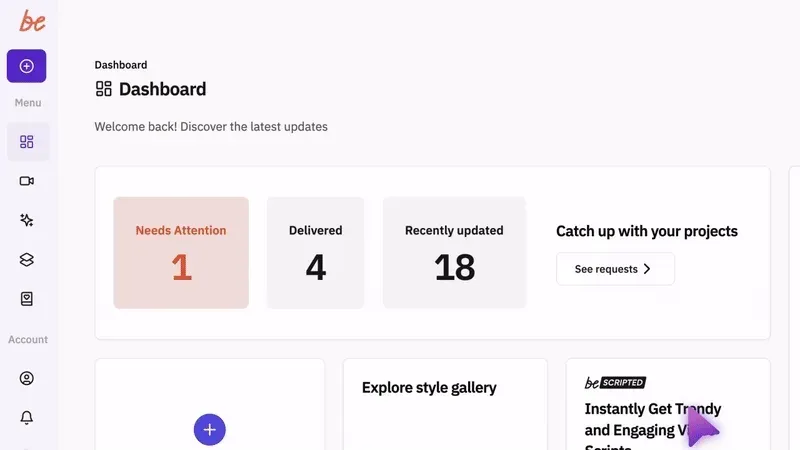
The newest model gaining traction offers unlimited editing for a flat monthly fee. These subscription services, like those offered by beCreatives, provide dedicated editors, unlimited revisions, and predictable monthly costs ranging from $495-2,000 depending on service level and turnaround requirements.
This approach revolutionizes video editing prices for high-volume creators and businesses. Instead of paying per video or per hour, you gain access to professional editing capacity on demand.
Factors That Influence Video Editing Prices
Multiple variables determine final editing costs beyond just the pricing model selected. Understanding these factors helps you evaluate quotes and choose appropriate services.
Editor Experience and Specialization
Experience level dramatically impacts video editing prices. Detailed breakdowns of cost factors reveal that specialized editors with expertise in motion graphics, color grading, or specific platforms command premium rates. An editor specializing in TikTok video editing understands platform-specific requirements that generalists might miss.
Experience tiers typically include:
- Beginner editors (0-2 years): Basic cuts, transitions, simple color correction
- Intermediate editors (2-5 years): Advanced effects, audio mixing, brand consistency
- Expert editors (5+ years): Complex storytelling, motion graphics, specialized techniques
- Specialist editors: Platform-specific optimization, niche content types
Project Complexity and Requirements
Simple talking-head videos require less time than multi-camera productions with extensive B-roll, motion graphics, and sound design. Complexity directly correlates with cost across all pricing models.
Consider these complexity factors:
- Number of camera angles and footage sources
- Motion graphics and animation requirements
- Color grading depth and sophistication
- Audio enhancement and mixing needs
- Special effects and compositing work
Turnaround Time Expectations
Rush jobs cost more. Standard turnaround typically ranges from 3-7 business days for most projects, but expedited delivery within 24-48 hours can increase video editing prices by 50-100%. Comprehensive guides on editing costs emphasize that timeline flexibility allows editors to manage workload efficiently, potentially reducing costs.

Comparing Service Options and Their Costs
Choosing between different service types requires understanding both immediate costs and long-term value. Each option serves specific needs and production volumes.
Freelance Marketplace Editors
Platforms like Fiverr and Upwork connect businesses with freelance editors at varying price points. Exploration of video editing cost options shows marketplace rates starting as low as $15-30 per video for basic edits, though quality varies significantly.
Pros:
- Wide selection of editors at different price points
- Easy to test multiple editors
- Project-by-project flexibility
Cons:
- Inconsistent quality and reliability
- Time investment in vetting and managing editors
- Communication challenges across time zones
- No guaranteed availability for ongoing work
Dedicated Freelance Editors
Establishing relationships with individual freelancers provides consistency and familiarity with your brand. These editors typically charge higher rates than marketplace alternatives but deliver more reliable results and understand your specific requirements over time.
Monthly retainers with dedicated freelancers range from $1,500-5,000 depending on volume commitments. This arrangement works well for businesses producing 5-15 videos monthly with consistent style requirements.
In-House Video Editors
Hiring full-time editors makes sense for organizations producing high volumes of content daily. Factors impacting video editing costs include not just salary ($45,000-85,000 annually) but also benefits, equipment, software subscriptions, and overhead expenses.
| Cost Component | Annual Expense Range |
|---|---|
| Base Salary | $45,000-85,000 |
| Benefits (30%) | $13,500-25,500 |
| Software/Tools | $2,000-5,000 |
| Equipment | $3,000-10,000 |
| Total Annual Cost | $63,500-125,500 |
Breaking this down to monthly costs ($5,300-10,500) reveals that in-house editors only become cost-effective at very high production volumes, typically 40+ videos monthly.
Unlimited Editing Subscriptions
Modern subscription services have transformed how businesses approach video editing prices. For a flat monthly fee, companies gain access to professional editing without per-project billing, making budgeting predictable and scaling straightforward.
These services typically offer:
- Dedicated editor assignment for brand consistency
- Unlimited revision requests
- Fast turnaround times (24-72 hours standard)
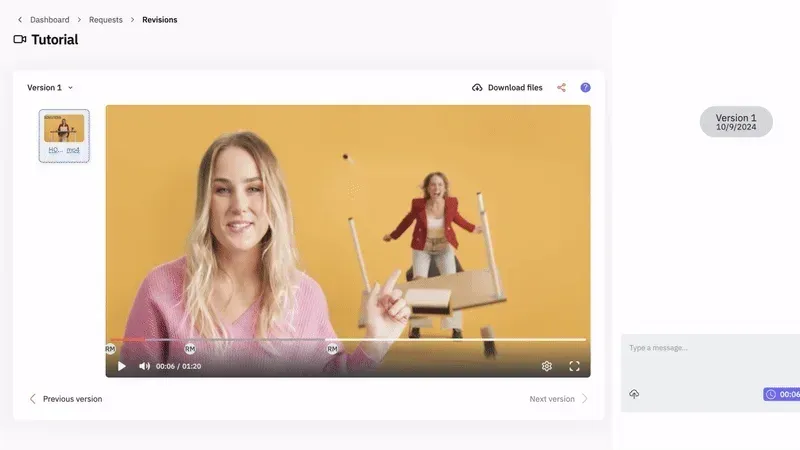
- Project management tools and communication platforms
- No contracts or long-term commitments
For businesses producing 10+ videos monthly, unlimited services often provide the best value proposition. A creator publishing daily TikTok content and weekly YouTube videos would pay $30-50 per video with traditional pricing but might access unlimited editing for $995-1,495 monthly.
Video Editing Prices by Content Type
Different content categories command different price ranges based on typical requirements, audience expectations, and platform specifications.
Social Media Video Editing
Short-form content for platforms like TikTok, Instagram Reels, and YouTube Shorts requires platform-specific optimization. Instagram Reels editing services understand vertical format requirements, trending audio integration, and caption styling that resonates with platform audiences.
Per-video pricing typically ranges from $30-150 depending on effects complexity and turnaround time. High-volume creators benefit significantly from unlimited social media video editing subscriptions that eliminate per-video costs.
YouTube Content Production
YouTube videos span diverse complexity levels. A simple vlog might require 2-3 hours of editing ($75-300 at standard rates), while highly-produced educational content with motion graphics, B-roll, and multiple scenes could demand 8-15 hours ($400-1,500+).
Gaming content editing services represent a specialized niche requiring understanding of game-specific editing techniques, highlight identification, and audience preferences. These specialized skills often command premium pricing within the YouTube editing category.

Corporate and Marketing Videos
Business video production for websites, presentations, and marketing campaigns typically involves higher production values and more stakeholder input. Video editing prices for corporate content range from $500-5,000 per video, with comprehensive cost guides showing that multiple revision rounds and brand compliance requirements drive costs upward.
Corporate video cost drivers include:
- Brand guideline adherence
- Multiple stakeholder approvals
- Professional motion graphics and lower thirds
- Licensed music and sound effects
- Closed captioning and accessibility features
Educational and Training Content
eLearning videos, tutorials, and training materials require clear organization and instructional design considerations. These projects typically cost $200-1,000 per finished video depending on length and graphic requirements.
Screen recording tutorials with basic editing cost less than animated explainer videos requiring custom graphics and voiceover integration. Understanding your specific educational content needs helps identify appropriate video editing prices and service levels.
Maximizing Value While Managing Video Editing Prices
Smart buyers focus on value rather than just minimizing costs. The cheapest option rarely delivers the best results or long-term efficiency.
Evaluating Total Cost of Ownership
Beyond quoted prices, consider time investment in project management, revision cycles, and quality control. A $50 video requiring three revision rounds and extensive communication consumes valuable time that could be spent on content strategy or audience engagement.
Calculate your fully-loaded cost including:
- Quoted editing price
- Your time managing the project (valued at your hourly rate)
- Revision and communication time
- Delays impacting publishing schedules
- Quality issues affecting audience engagement
Preparing Assets Efficiently
Reducing editor workload through better asset organization can lower video editing prices or improve turnaround times. Providing organized footage, clear shot lists, and detailed editing notes streamlines the process.
Best practices for asset preparation:
- Organize footage into clearly labeled folders
- Remove obviously unusable clips before uploading
- Provide timestamp notes for key moments
- Include reference videos for desired style
- Supply brand assets (logos, fonts, color codes)
- Write clear editing instructions with priorities
Building Long-Term Editor Relationships
Consistency reduces costs over time. Editors familiar with your brand, style preferences, and workflow requirements work more efficiently than those starting fresh with each project. This efficiency translates to faster turnaround, fewer revisions, and often better pricing for ongoing work.
Whether working with individual freelancers or subscription services, maintaining consistent relationships improves results while stabilizing video editing prices.
Choosing the Right Pricing Model for Your Needs
No single approach works for everyone. Matching your production volume, budget constraints, and quality requirements to the appropriate service type optimizes both costs and results.
Low-Volume Occasional Needs
If you produce fewer than 5 videos monthly with irregular scheduling, per-project pricing with freelancers offers flexibility without ongoing commitments. Budget $150-500 per video depending on complexity and maintain relationships with 2-3 reliable editors to ensure availability.
Medium-Volume Regular Production
Businesses publishing 5-20 videos monthly benefit from either monthly retainers with dedicated freelancers or unlimited subscription services. Compare total monthly costs against per-project alternatives to identify the best value.
At 10 videos monthly, a $200 per-video freelancer costs $2,000 monthly, while an unlimited service might provide the same output for $995-1,495 with faster turnaround and unlimited revisions.
High-Volume Daily Publishing
Content creators and agencies producing 20+ videos monthly require scalable solutions that don't multiply costs linearly with volume. Unlimited editing subscriptions become increasingly cost-effective as production increases, essentially eliminating marginal costs for additional videos.
| Monthly Video Volume | Per-Project Cost ($150/video) | Unlimited Subscription | Monthly Savings |
|---|---|---|---|
| 10 videos | $1,500 | $995 | $505 |
| 20 videos | $3,000 | $1,295 | $1,705 |
| 40 videos | $6,000 | $1,495 | $4,505 |
| 60 videos | $9,000 | $1,495 | $7,505 |
Multi-Platform Content Strategies
Businesses publishing across YouTube, TikTok, Instagram, LinkedIn, and other platforms need editors understanding platform-specific requirements. Generalist editors might deliver technically competent work that misses platform nuances affecting performance.
Specialized services or editors with demonstrated platform expertise ensure content optimized for each distribution channel, maximizing return on your content investment beyond just managing video editing prices.
Red Flags and Quality Indicators When Evaluating Editors
Extremely low video editing prices often signal quality or reliability issues. Recognizing warning signs prevents costly mistakes and project delays.
Warning signs to watch for:
- Prices significantly below market rates without clear explanation
- Poor communication or delayed responses
- No portfolio or sample work demonstrating relevant experience
- Reluctance to discuss revision policies
- Unclear deliverable specifications
- No references or client testimonials
Quality indicators include:
- Relevant portfolio demonstrating your content type
- Clear communication and professionalism
- Transparent pricing and revision policies
- Positive client reviews and testimonials
- Understanding of your platform and audience
- Proactive suggestions for improving content
The Future of Video Editing Prices
As artificial intelligence tools become more sophisticated, video editing prices and service models continue evolving. AI-assisted editing reduces time required for basic tasks like rough cuts, transcription, and simple color correction, allowing human editors to focus on creative storytelling and strategic decisions.
This technological shift doesn't eliminate need for professional editors but changes the value proposition. Editors leveraging AI tools deliver faster turnaround and potentially lower prices while maintaining or improving quality. Subscription services incorporating these tools provide increasing value at stable price points.
Understanding these market dynamics helps businesses make informed decisions about video editing investments. The goal isn't finding the cheapest option but identifying the best value for your specific needs, production volume, and quality requirements.
Navigating video editing prices in 2026 means understanding the full spectrum of options from hourly freelancers to unlimited subscriptions, each offering distinct advantages for different production scenarios. Smart buyers evaluate total cost of ownership, including their time investment and quality outcomes, rather than just quoted prices. If you're producing regular video content across multiple platforms, beCreatives provides unlimited editing services with dedicated editors, transparent pricing, and streamlined workflows that eliminate the complexity and unpredictability of traditional video editing costs.